









Chicago Moving Truck Parking: Plan a Legal Loading Spot
Chicago Moving Truck Parking: How to Plan a Legal Loading Spot
Your crew pulls up at 8 a.m., the truck is 26 feet long, and a delivery van is parked right where you planned to load. On most Chicago blocks, the curb is where a move is won or lost. Get it right and the day flows. Get it wrong and your movers carry boxes a block and a half while the hourly clock keeps running.
At All Seasons Movers, we plan the curb before we plan anything else. This guide shows you how to do the same, using city rules that were current on November 14, 2026.
Why Moving Truck Parking in Chicago Gets Tricky
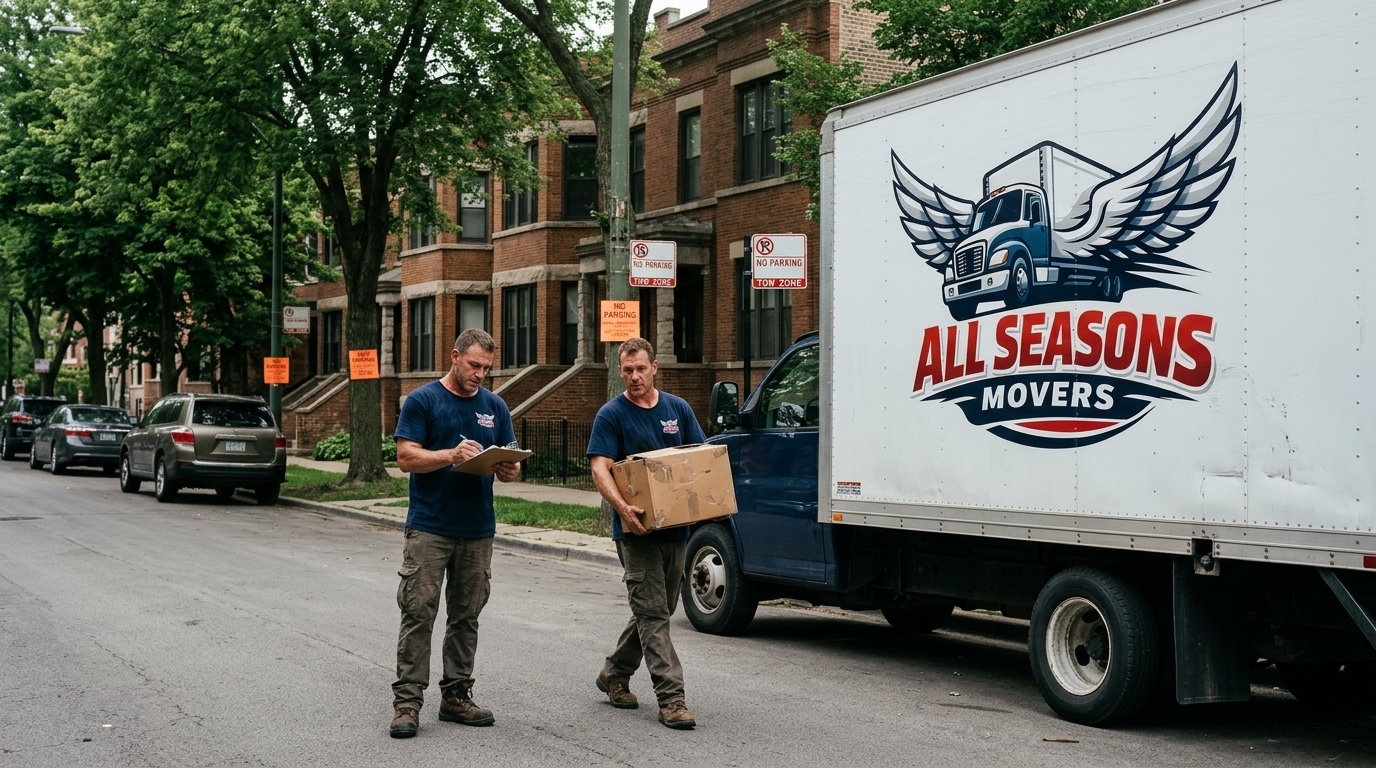
Many apartments, condos, and three flats have no usable alley or driveway, so movers end up working from the street. Local guides note that a Temporary No Parking permit from the Chicago Department of Transportation (CDOT) is generally needed when a truck will sit on a public street. Add resident permit zones, metered spots, and street cleaning signs, and the margin for error shrinks fast.
Four Steps to a Legal Loading Spot
1. Check Your Building First
Ask your landlord or property manager about a private loading dock, an alley entrance, or a reserved space. Many buildings have move in rules, including elevator reservations and certificates of insurance. Settling this first can simplify everything that follows.
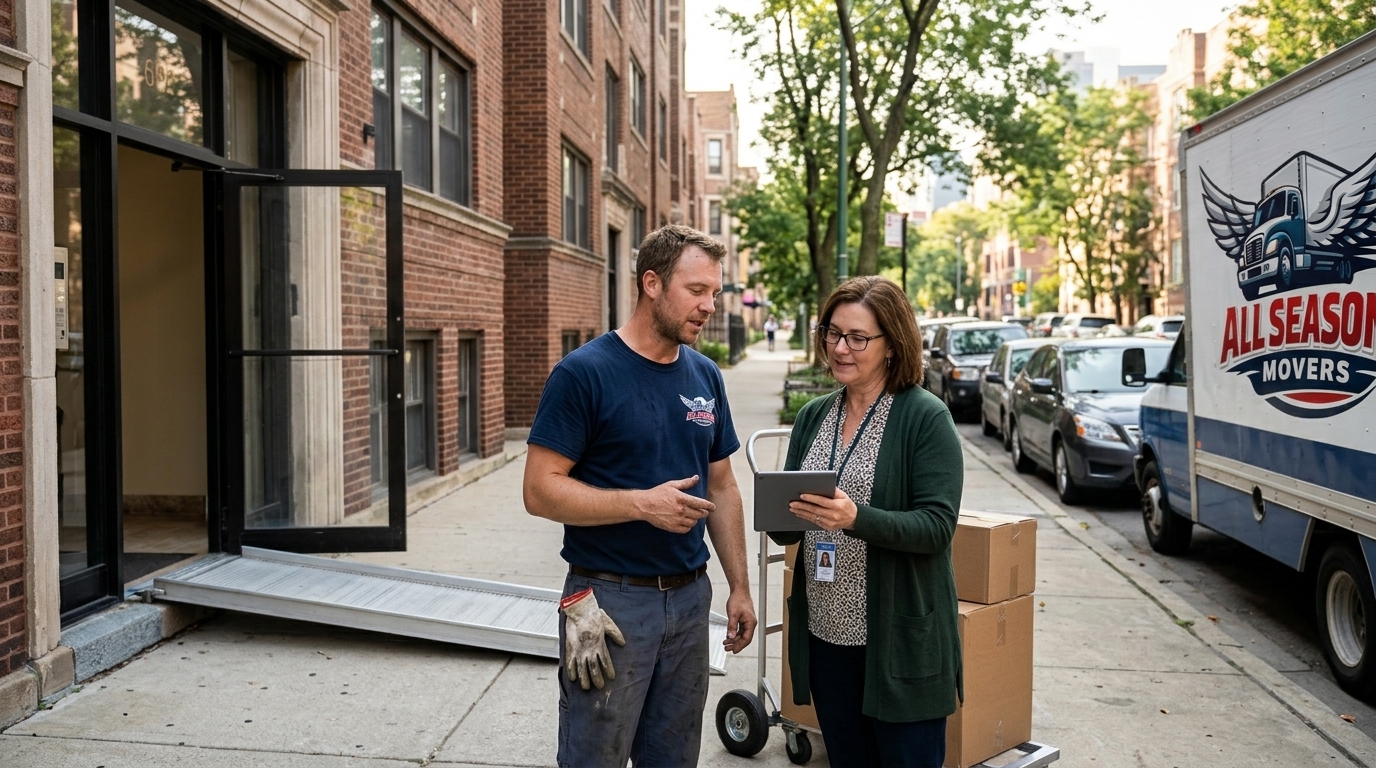
2. Choose Courtesy Signs or Enforceable Signs
Chicago uses two kinds of moving signs. Courtesy signs, often free from your alderman's office, are not enforceable, so they only work if other drivers are polite. Ward offices advise posting them at least 48 hours ahead. Enforceable signs come from CDOT for a $25 fee on the day of the move, and the application runs through the CDOT permit portal. Ward pages describe eligibility for these signs differently, so call CDOT at 312 744 4652 to confirm who should apply, you or your mover.
3. Measure Before You Book
A full size moving truck needs more than its own length. Plan for room to park, open the rear ramp, and stage items on the sidewalk safely. Walk the block, look for hydrants, bus stops, bike lanes, driveways, and overhead wires, and photograph what you find. Measure from the entrance to the likely parking spot, because every extra 50 feet adds real time to the job.
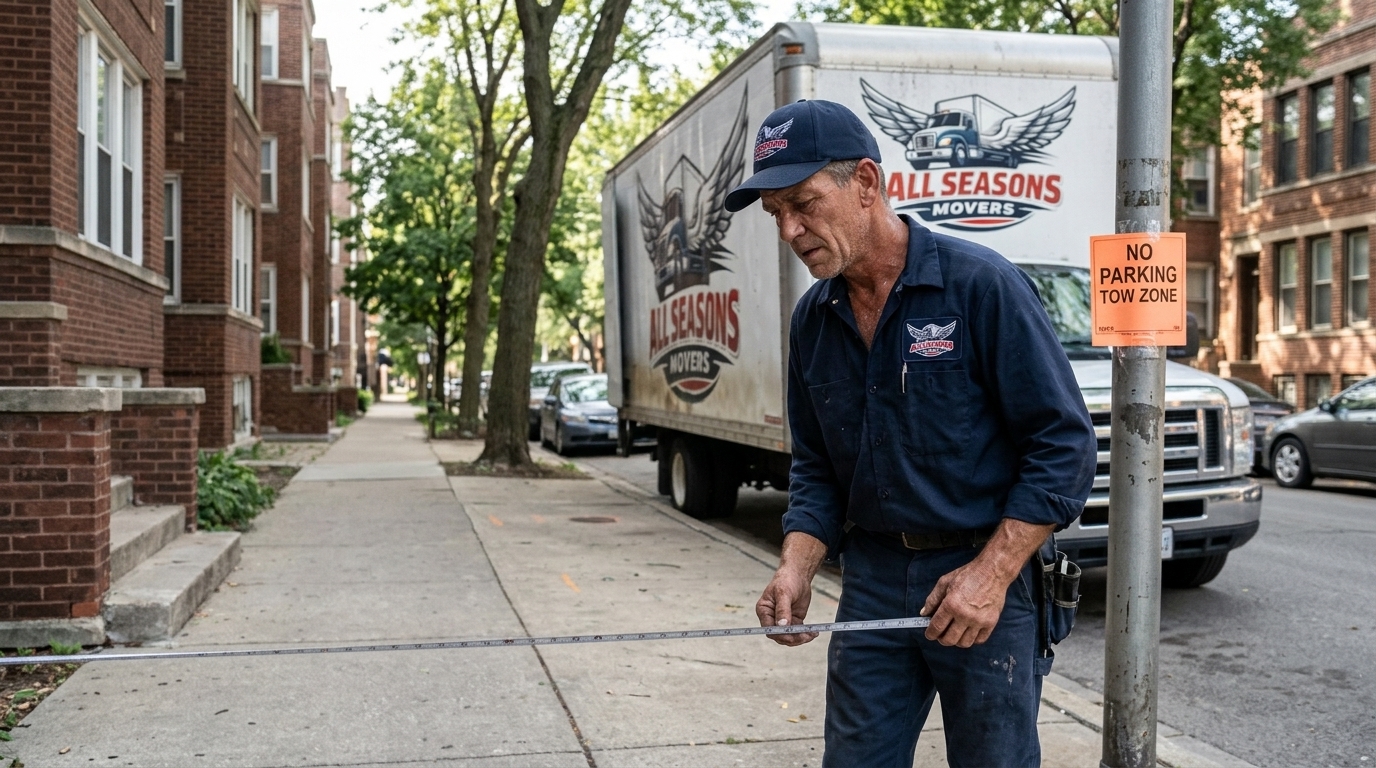
4. Build a Backup Plan
Even a perfect permit can fail when a delivery truck or contractor takes the space. Identify a second spot on the same block, an alley option, or a short stretch of curb where a smaller shuttle vehicle could stage items. Share the plan with your crew lead the night before so nobody improvises at the curb.
What a Permit Will Not Do
A permit is not a magic wand. One local explainer notes that it does not legalize a space that is already illegal, so hydrants, bus stops, bike lanes, and loading zones stay off limits. Street cleaning signs also take precedence over moving signs, according to a ward office, and orange sweeping notices go up about 48 hours ahead. Read every sign on your block the day before.
Commercial loading zones deserve special care. Posted hours and vehicle types vary, and some zones are reserved for delivery vehicles during business hours. Read the sign before you assume a loading zone is available for a residential move, and never rely on a verbal okay from a passerby.
Moving to a suburb? Chicago's permit process applies only inside city limits, and towns like Evanston, Oak Park, and Skokie often have their own systems. Contact that municipality directly. Our wider Chicago local moving rules guide covers the bigger picture.
Fuel Costs and Freight Pressure on Chicago Streets
Parking delays cost more when fuel is expensive. Local reporting put the metro diesel average at a record $6.30 a gallon on May 15, and C.H. Robinson's November 2026 update says diesel remains costly because refining, not crude oil, is setting the pace. A truck idling while a crew hunts for space burns fuel and billable time. National diesel prices have eased recently, according to a FleetOwner weekly roundup, but a clear curb is still one of the cheapest ways to protect your budget.
Moving Day Curb Checklist
Confirm building rules and elevator times two weeks ahead.
Apply for CDOT signs early and save the confirmation.
Photograph posted signs the day before.
Tell your crew lead the exact address and backup spot.
Keep the permit paperwork on hand at the curb.
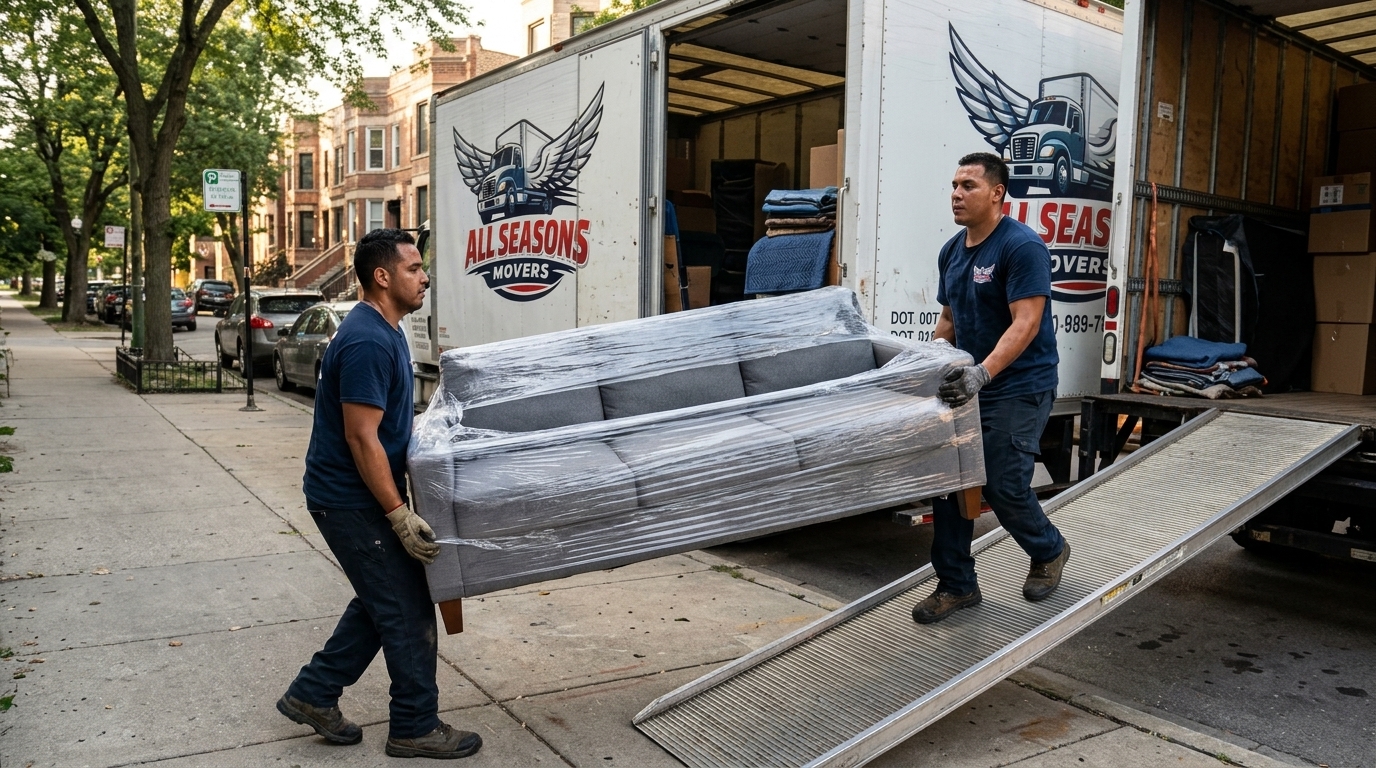
Smart Timing Beats Extra Muscle
Early mornings and mid month weekdays usually mean fewer competing deliveries and fewer neighbors moving at the same time. End of month Saturdays are often the busiest days on the block. If your lease dates are flexible, shifting a move by one day can protect your plan.
Questions to Ask Your Mover About the Curb
Not every crew handles street logistics the same way. Ask these before you hire:
What truck size will arrive, and how much curb does it need?
Do you coordinate permit signs, or do I apply?
What is your plan if the space is blocked on arrival?
Will extra carrying distance change my estimate?
A Clear Curb Makes the Whole Move Easier
Moving truck parking in Chicago rewards the people who plan early. Check your building, choose the right signs, measure the walk, and keep a backup ready. Rules and fees can change, so confirm details with CDOT before you book. Do that, and your crew spends the day moving your life instead of circling the block.
Ready to Book Your Chicago Move?
Call All Seasons Movers at (872) 465 8685 and tell us your address, building type, and move date. We will help you plan the truck, the curb, and the crew so moving day stays calm. You can also explore our local movers in Chicago page to see how we handle moves across the city.