







How to Prepare Large Appliances Before Moving Day (Chicago Guide)
How to Prepare Large Appliances Before Moving Day
Your refrigerator is unplugged, the washer is still full of water, and the movers arrive in an hour. Sound familiar? Large appliances cause more last minute moving day delays than most other items in a home. The good news is that preparing appliances for moving is simple when you break it down by appliance and timeline. Here is what to do, and when to do it.
Start With the Manufacturer Manual
Every brand has its own quirks, so locate each manual first. If one is missing, search the model number on the maker's website. Whirlpool's moving guide notes that gas lines are especially risky to disconnect and reconnect, which is why this step matters before anything else. Take photos of cable and hose connections too. They make reinstalling at your new home far easier.
A Simple Timeline: Seven Days Out to Moving Day
1. One Week Before: Book a Licensed Technician
Hardwired appliances and anything connected to gas should be handled by a pro. As Gentle Giant points out, many moving companies will not touch these connections. Gas stoves, gas dryers, and built in dishwashers all fall into this group. Book a technician about a week ahead so a scheduling gap never delays your move.
2. Two Days Before: Refrigerator and Freezer
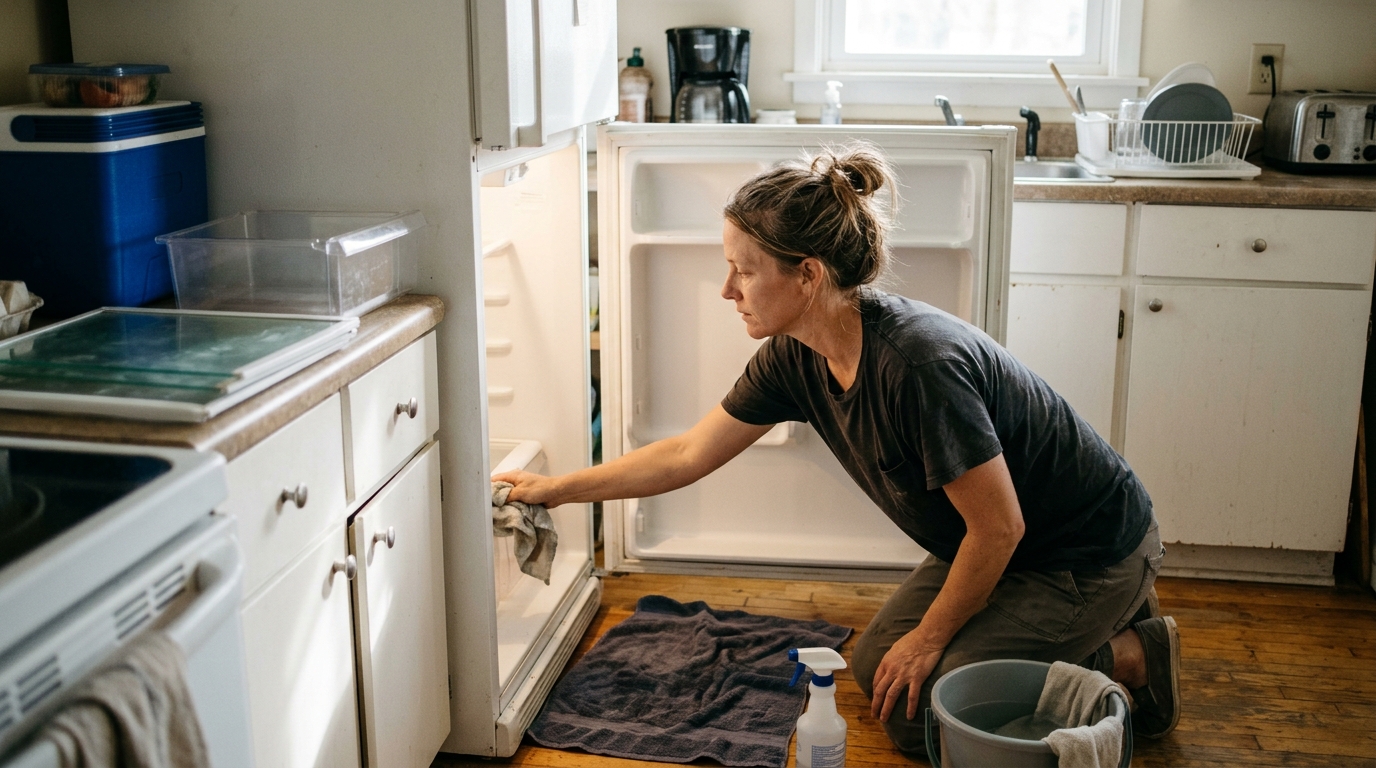
Unplug the fridge at least 24 hours ahead, and 48 is safer for a packed freezer. Leave the doors open, place towels on the floor, and empty the drip pan. Remove shelves and drawers, drain the water line, then wipe the interior completely dry. Trapped moisture breeds mildew, and that smell follows you to the new place. Use a cooler for food on moving day.
3. One Day Before: Washer and Dryer
Run an empty cycle, then disconnect the hoses and let every drop drain out. Washers usually need transit bolts or a shipping kit to lock the drum, so check your manual. Wipe the dryer lint trap and vent hose, and keep small parts together in a labeled bag taped to the machine. Olympia Moving recommends a dedicated appliance kit for this.
4. Morning Of: Dishwasher, Range, and Microwave
Shut off the water supply, drain the dishwasher hoses, and secure loose racks. Remove oven racks from ranges and tuck cords neatly against the back. Skip cardboard in the microwave door opening, since Allied warns it can spring the door during transit.
What Most Guides Miss: Chicago Buildings and Tight Paths
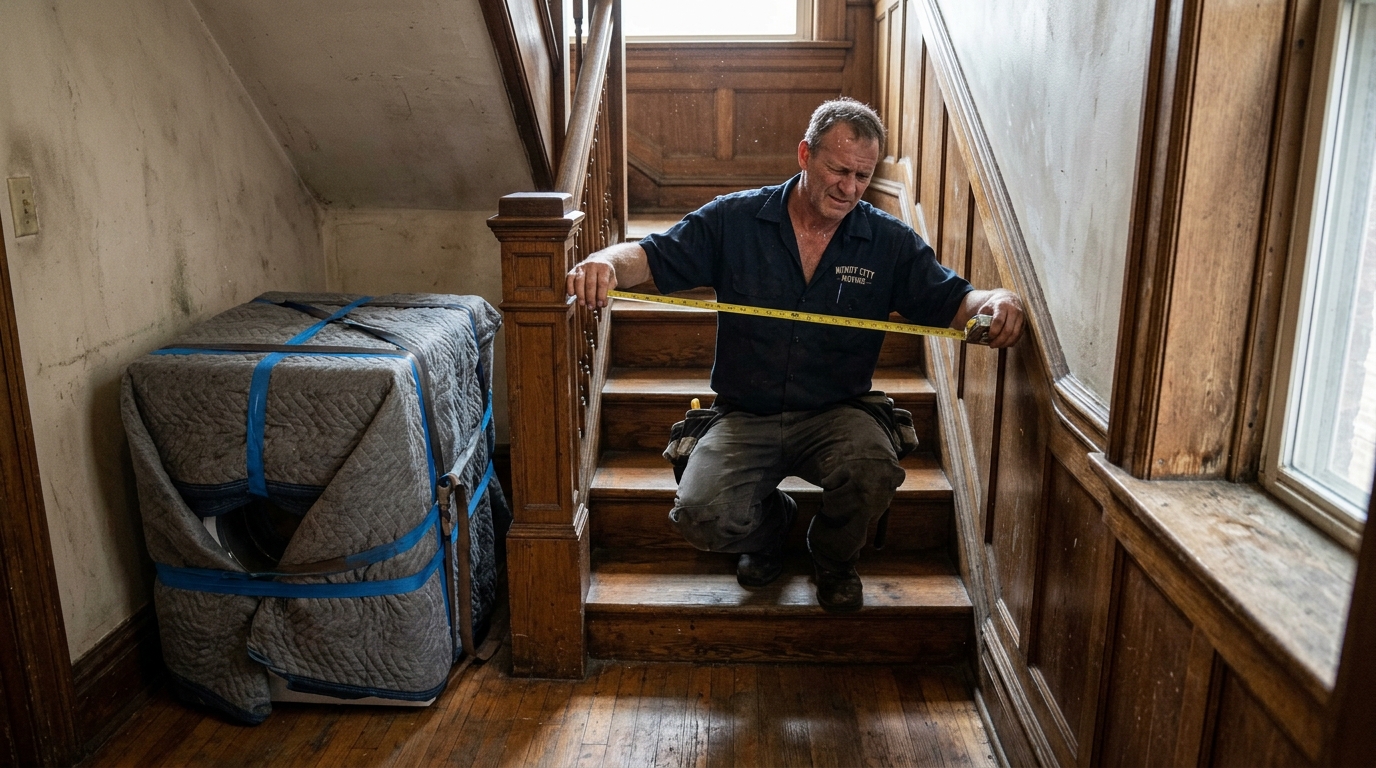
Most checklists stop at the appliance itself. Yet in Chicago, the path matters just as much. Walkups, narrow greystone stairwells, and high rise elevators with booking windows can decide whether a refrigerator fits out the door. Measure the appliance and every doorway, turn, and landing. Reserve the elevator early, and protect floors with cardboard or plywood, as Whirlpool suggests. If the numbers do not work, tell your mover in advance so the right crew and equipment arrive.
When to Call Licensed Technicians
Some jobs are not worth the risk. Call a licensed technician for gas lines, hardwired connections, ice maker water lines, and any custom installation that needs adjustments after the move. A professional also protects your warranty and your safety. If you are unsure, ask your mover which items they will disconnect, and which ones they will not.
Moving Day Protection and Smart Loading
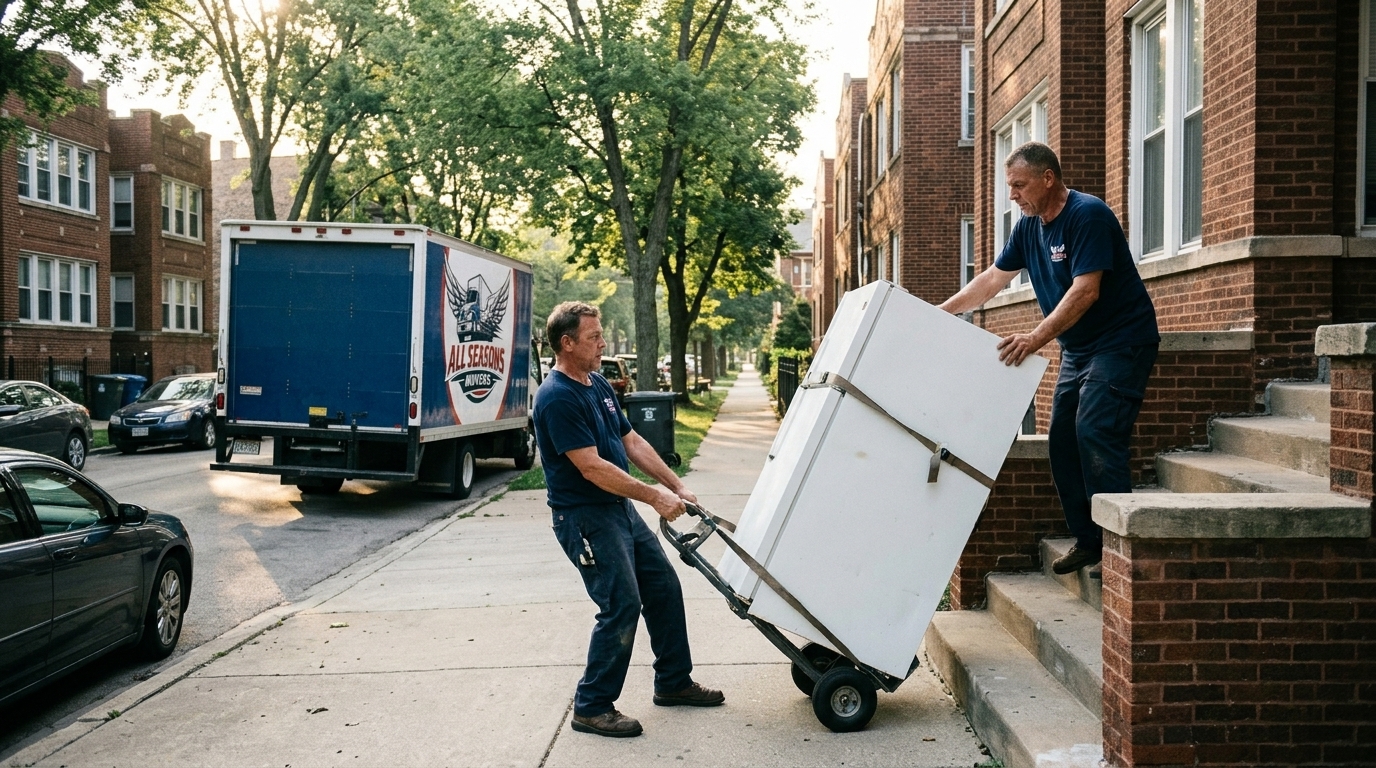
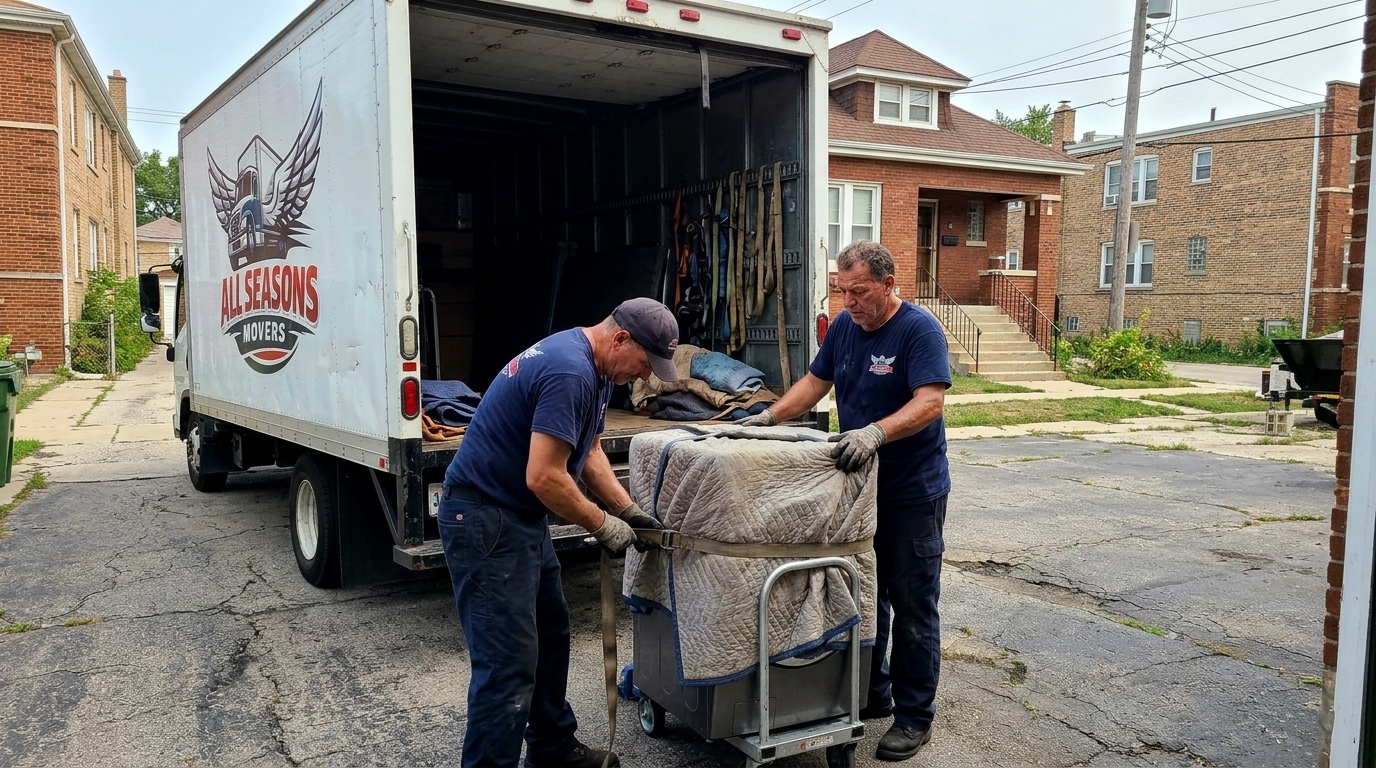
Wrap each appliance in moving blankets and secure the doors, then strap it upright on a dolly. Never lay a refrigerator down, and never drag any unit across hardwood. Heavy items load first so lighter boxes sit on top. Our team at All Seasons Movers handles this daily across the city and suburbs, so you can stay focused on everything else. Packing smaller kitchen items too? Read our guide to packing small appliances for the rest of the kitchen.
Chicago Fuel and Logistics: Why Timing Matters
Fuel costs are part of the moving picture this year. The national average for on highway diesel fell to $6.127 in early November, according to FleetOwner citing the EIA, but it remains far above past years. Chicago drivers also face an Illinois toll increase slated for January, as discussed by WTTW. What does that mean for you? Book early, avoid last minute changes, and confirm your appliance list so crews arrive with the right truck and no wasted trips.
Quick Moving Day Appliance Checklist
Manuals found and gas appliances scheduled with a technician.
Fridge unplugged, emptied, defrosted, and dry.
Washer drained with transit bolts installed.
Parts bagged, labeled, and taped to each unit.
Doorways measured and elevator reserved.
Common Questions Before the Big Day
Can I leave my fridge plugged in until moving day?
Not if it has a freezer full of ice. Unplug it at least 24 hours ahead so meltwater never leaks onto your floors or the truck.
Do movers disconnect appliances for me?
It depends on the company and the appliance. Most crews will handle simple unplugging and water line disconnects, but gas and hardwired units usually need a licensed technician. Always confirm when you book.
Should I tape appliance doors shut?
Use painter's tape or straps rather than heavy adhesive, which can mar finishes. Remove loose shelves and keep them wrapped separately so nothing shifts or cracks in transit.
Final Thoughts
Preparing large appliances is mostly about timing, small details, and knowing your limits. Do the cleaning and drying early, hand gas and hardwired work to licensed pros, and plan your path through the building. Do that, and moving day feels calm instead of chaotic. Ready to hand off the heavy lifting?
Book Your Appliance Move Today
Call All Seasons Movers at (872) 465 8685 for a quote and a crew that knows how to handle refrigerators, washers, dryers, and tight Chicago stairwells. Prefer to book online? Visit our local movers Chicago page, tell us about your appliances, and we will build a plan around your building, your schedule, and your budget. Your move starts with one simple call.