













New Blog Post
How to Move a Fish Tank: Preparing an Aquarium for Transport
Most Chicago households plan around couches, boxes and elevator reservations. Fewer plan for the 55 gallon aquarium humming in the corner. Yet learning how to move a fish tank begins with one idea: the fish, the tank and the equipment are three separate moves. Plan each one early and nothing cracks, leaks or panics. Whether you hire All Seasons Movers or handle part of the job yourself, a clear aquarium plan protects your fish and your floors.
Why an Aquarium Is Not Just Another Box
Glass is rigid, heavy and unforgiving. A 55 gallon tank holds roughly 460 pounds of water alone, before gravel, rocks and the stand. Guides from Public Storage and Extra Space Storage agree on the basics: never move a tank while it holds water, substrate or fish. One wet rock dropped on the glass can end the project. Planning ahead turns a risky lift into a calm, organized morning.
Chicago Logistics and Fuel: Why Your Prep Matters More This Season
Fuel costs are shaping trucking schedules across the country. AAA put the national diesel average at a record $6.51 a gallon in September, according to WTTW's Chicago Tonight, and an Associated Press report on November 23 says small trucking firms are fighting to survive mounting diesel costs. For you, that can mean tight routes and tight windows. A tank still full of water when the crew arrives can cost the whole day, so finish your aquarium prep before the truck pulls up.
Your Aquarium Moving Timeline
1. One Week Out: Gather Supplies and Call a Specialist
Collect siphon tubing, nets, clean buckets, towels, bubble wrap, sturdy boxes and a few packing blankets. Photograph how your equipment connects so reassembly is easy. Then speak with your aquarium store or a qualified specialist about your particular fish, plants and water setup. Species differ, and an expert can answer what general guides cannot.
2. Two Days Out: Plan the Fish Transport
Fish never travel inside the tank. They travel in suitable containers filled with water from their own aquarium, and they stay with you, ideally in a heated car rather than a cold truck. Chicago winters are rough on aquatic life, so keep the trip short and the temperature steady. Aqueon also advises fasting fish before the move, though your specialist should confirm timing for your species.

3. Moving Day: Break Down the Tank
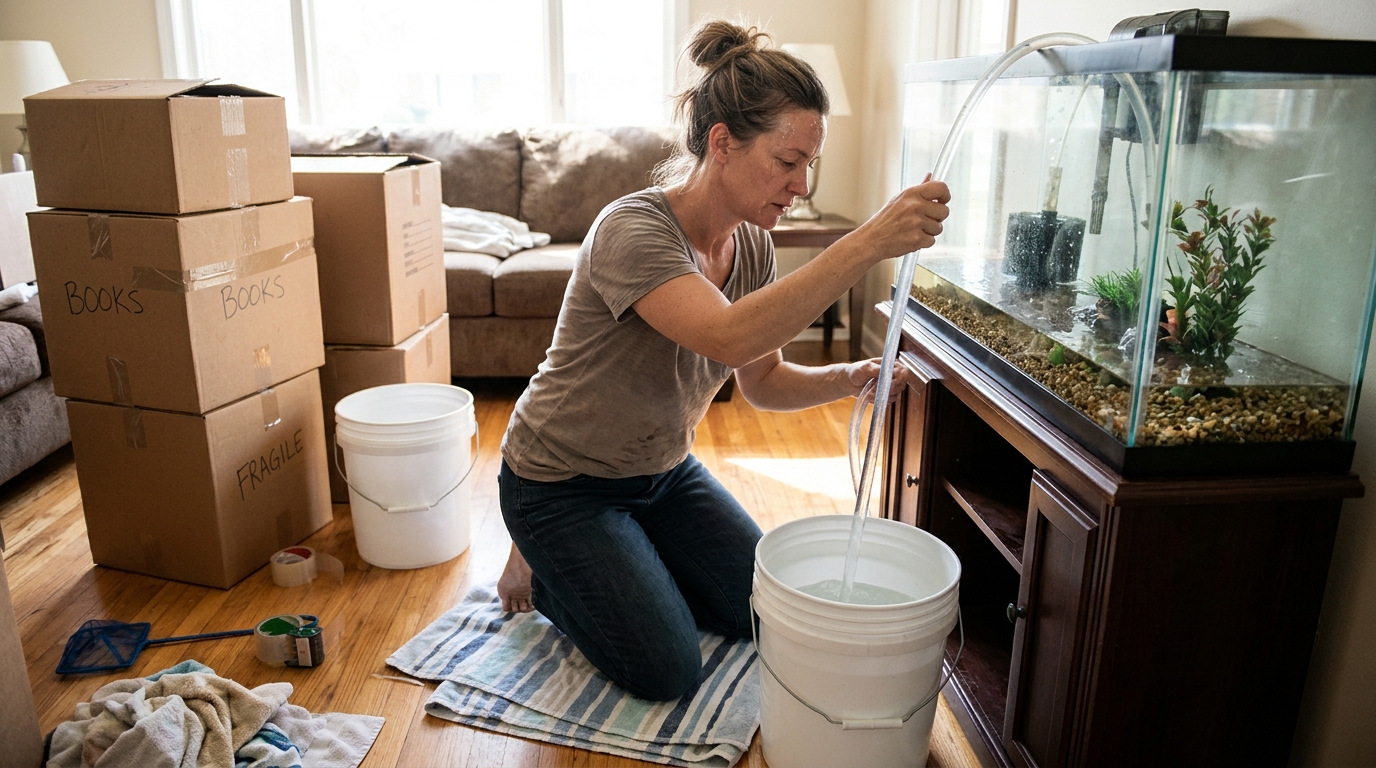
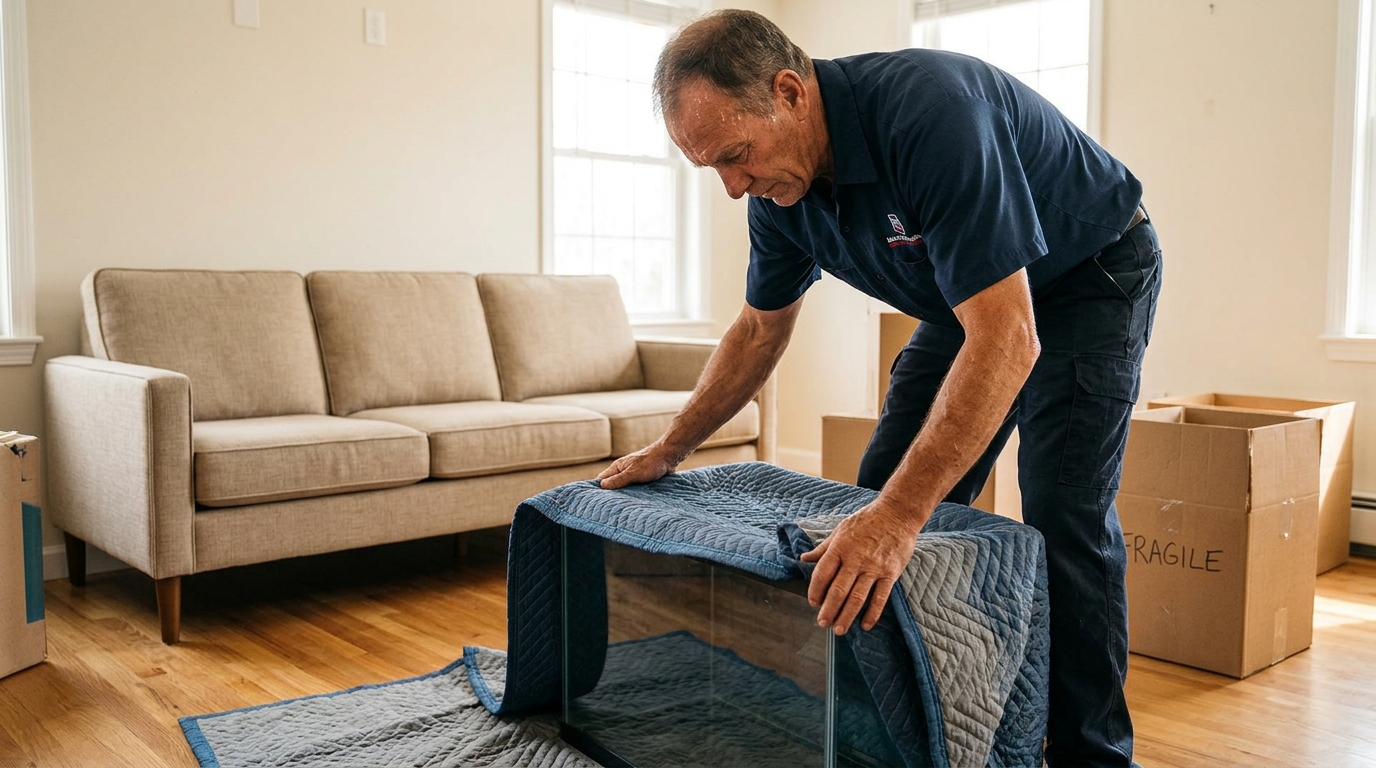
Unplug everything first and set up your fish containers. Remove décor, rocks and equipment so the fish are easy to net, then transfer them gently. Drain the water with a siphon into clean buckets, saving as much established water as your specialist recommends. Take out substrate in small batches. Dry the glass, wrap the lid separately and pad the empty tank with blankets.
4. After Arrival: Rebuild in Order
Choose the final spot before moving day, because a tank should sit level on a stand that can carry the full weight. Reassemble, refill with your saved water, treat any new water as your specialist advises, and check for leaks before returning fish. Then watch them closely for several days.
What to Hand the Crew and What to Carry Yourself
Most guides stop at the fish. Few explain how the rest of your aquarium fits into a full household move. Here is a simple split:
Carry yourself: fish, plants, saved tank water and any medication or test kits.
Crew handles: the cleaned, dry, padded tank, stand, lid, cabinet and sealed boxes of décor.
Tell your crew in advance that an empty aquarium and stand are on the inventory so they can plan padding, loading order and a flat spot in the truck. Label every box FRAGILE and mark the side that faces up. If you are unsure how to prep your whole home, this prep checklist covers the rest.
Three Mistakes That Ruin Aquarium Moves
Lifting a tank with water, gravel or fish still inside.
Leaving fish in a cold vehicle or parked truck.
Skipping the leak check before adding fish.
When to Bring in an Aquarium Specialist
Call a professional for large tanks, saltwater or reef systems, built in aquariums or long distance moves. These setups involve delicate water chemistry and equipment that general advice cannot cover. Please note that All Seasons Movers focuses on household moving, so live fish should always be handled by you or a specialist, never loaded onto a truck.
Planning for Chicago Buildings and Weather
Chicago adds its own twists. Walk ups, narrow greystone stairwells and high rise elevators all change how a bulky tank travels. Measure doorways, hallways and stair turns before moving day, and reserve the freight elevator if your building requires one. A tank that fits through the old door may not clear the new one.
In winter, plan the shortest path from lobby to vehicle. Long exposure to freezing air is hard on glass, seals and fish alike, so keep every carry quick and every doorway clear.
Quick Answers
Can you move a fish tank with water in it?
No. Water adds hundreds of pounds, strains the seams and makes spills likely. Drain it completely first.
Should fish ride in the moving truck?
No. Keep them with you in a climate controlled vehicle, away from cold, heat and loud vibration, and ask your specialist about the right containers.
Ready for a Calmer Moving Day?
A successful aquarium move comes down to timing, separation and expert advice. Plan the fish transport first, break the tank down carefully, and let your crew handle the heavy household load.
Book your Chicago move today. Call All Seasons Movers at (872) 465 8685 or explore our local movers in Chicago page to request a quote and get a crew that respects your fragile items, from sofas to packed boxes. Early planning protects your schedule, belongings and peace of mind. We gladly answer your questions.