










Moving Chicago: The Local Playbook for a Smooth Arrival
Moving Chicago: The Local Playbook for a Smooth Arrival
Moving Chicago sounds simple until you meet a fourth floor walk up, a city block with no legal parking and a January wind coming off the lake. Most guides sell you the skyline and the pizza. This one covers what actually decides whether your move goes well: timing, access, permits and your first thirty days.
What the Top Guides Leave Out
Search results for moving Chicago are packed with neighborhood rankings and cost of living tables. Useful, but none of it explains how to physically get your belongings through a Chicago front door. That gap is where most stress and surprise fees begin.

Pick Your Neighborhood by Move Difficulty
Before you fall for a zip code, consider how easy it is to load and unload there:
1. Loop and River North Towers
Expect reserved elevators, insurance paperwork and strict move windows. Book early and confirm your building's rules in writing.
2. Lincoln Park and Lakeview Walk Ups
Stairs are the main challenge. Tell your mover the floor count and staircase width so crews and time are estimated correctly.
3. Bungalow Belt and Suburbs
Driveways and garages make loading easier, but basements and older narrow doorways can slow furniture down.
Timing Your Move Around Chicago Seasons

Season shapes price, availability and safety in this city:
Summer: busiest and most expensive, so book early
Fall: mild weather and easier scheduling
Winter: ice and snow demand extra floor protection
Spring: leases turn over, so weekends fill fast
Pro tip: a Tuesday or Wednesday move often means better availability and calmer streets.
Parking, Permits and Access
A loaded truck is useless if it cannot stop near your door. Handle these early:
Ask your building about a loading zone or dock
Check whether the city requires a permit to reserve curb space
Measure doorways, stairwells and elevators for large furniture
Share photos of your entrance with your mover
Ten minutes of prep here can save an hour of crew time on move day.
Where All Seasons Movers Fits In

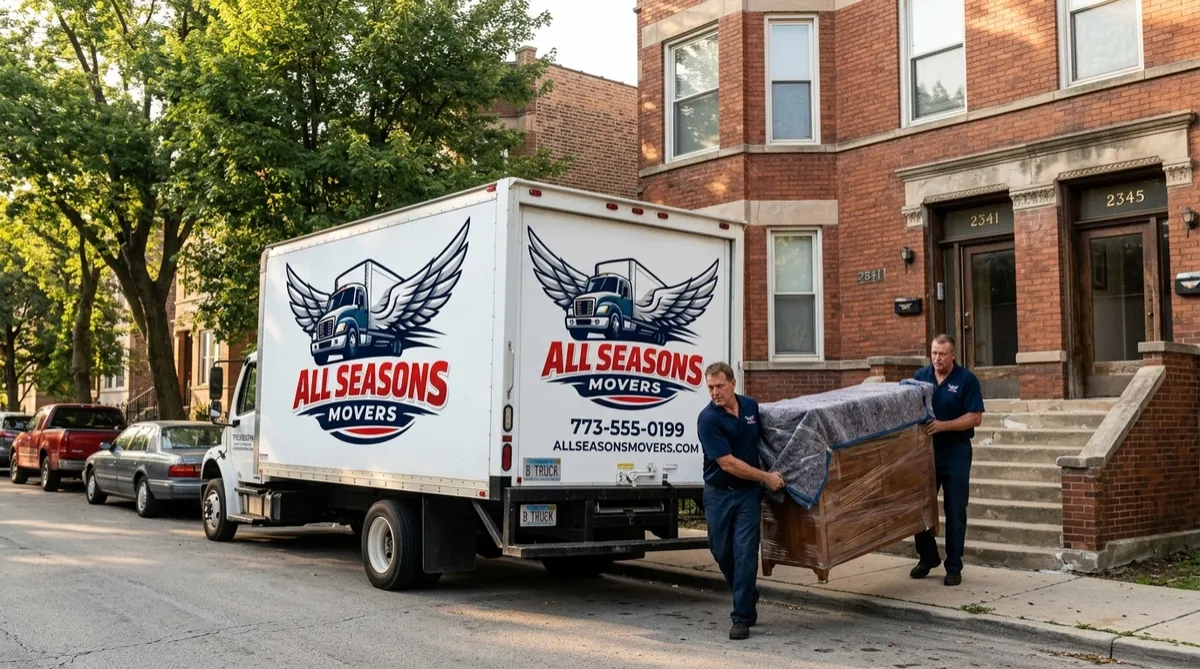
All Seasons Movers plans every Chicago move around access first: stairs, elevators, parking and weather. That means an accurate estimate, the right crew size and fewer surprises when the truck arrives.
Want a plan for your own address? Get a moving quote and share your building details upfront.
Your Moving Chicago Timeline
Six Weeks Out
Choose your neighborhood, gather quotes and give notice on your current lease. Start decluttering room by room.
Two Weeks Out
Confirm your mover, reserve elevators, begin packing rarely used items and set up utilities at your new address.
Move Week
Pack essentials separately, defrost the freezer, charge devices and confirm arrival times with your crew lead.
Your First 30 Days in Chicago
Once the boxes are inside, handle the paperwork that keeps life running:
Update your address with the state and your bank
Register your vehicle and check local parking rules
Learn your nearest L stop and grocery run
Meet your neighbors and building manager
Unpack the kitchen and bedroom first
Common Mistakes When Moving Chicago
Avoid these costly errors:
Booking a truck size before counting stairs and access
Waiting until the last week to reserve an elevator
Packing fragile items without proper padding
Ignoring the forecast on winter move day
Leaving valuables in unmarked boxes
How to Pack for Chicago Conditions
Humidity, cold and stairs all affect how you should pack:
Protect Against Temperature Swings
Electronics, candles and liquids react badly to freezing trucks. Move them in your own car when possible, and let electronics reach room temperature before plugging in.
Use Smaller Boxes for Heavy Items
Books and kitchenware belong in small boxes. Heavy loads on stairs cause strain, dropped boxes and slower moves.
Label by Room and Priority
Mark each box with a room name and a number from one to three. Number one boxes get opened first, which makes the first night far easier.
Local Move or Long Distance Arrival?
Your situation changes your plan:
Moving Within the City
Local moves are often billed by time, so preparation matters. Pack ahead, clear pathways and keep stairs free of clutter so the clock works for you.
Arriving From Another State
Delivery windows can be wider, so keep an overnight bag and essentials with you. Confirm the delivery address, building rules and elevator booking before your truck leaves.
Small Details That Make Move Day Smoother
Disconnect and photograph cables before unplugging electronics
Keep walkways and stairs clear and dry
Point out floors and door frames that need extra protection
Set aside valuables, documents and medications to carry yourself
Stay reachable by phone for the crew lead
Quick Questions About Moving Chicago
Is Chicago hard to move into?
It is manageable with planning. Access, parking and weather cause most problems, and each one is easier to solve with early preparation.
How early should I start planning?
Six weeks is ideal for most moves. Start sooner for summer dates, large homes or buildings with strict elevator schedules.
Should I hire help or move myself?
Renting a truck looks cheaper until you add parking stress, stairs and injury risk. Professional crews bring equipment, experience and efficiency that a weekend of borrowed muscle rarely matches.
Ready to Start Moving Chicago?
Moving Chicago is easier when you treat it like a project instead of a pile of boxes. Choose a neighborhood with your move difficulty in mind, time your date around the seasons, sort out parking and building rules early and pack for the conditions your belongings will face. Do those four things and the rest falls into place. Go one step at a time, lean on local experience where you need it and give yourself permission to enjoy the fresh start. Your new address is waiting, and with the right plan, arriving there can be the easy part of the story.