







































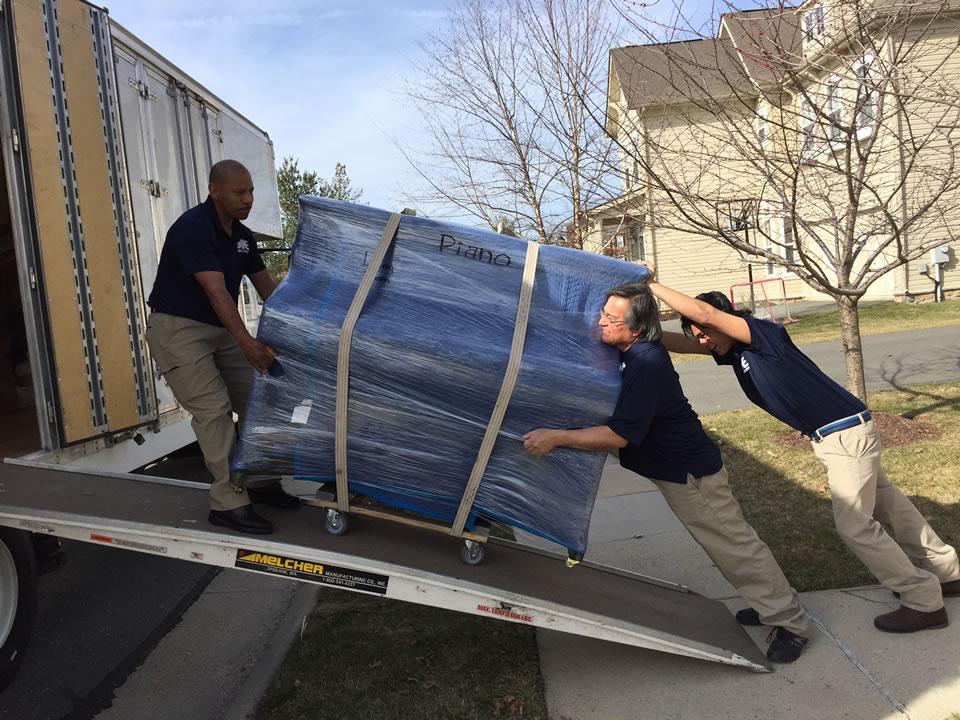
Moving a Piano: The Complete Guide
Moving a Piano: The Complete Guide to Doing It Right (Without Wrecking the Piano — or Yourself)
Let's be real — moving a piano is not like moving a couch. It's heavy, awkward, emotionally loaded (that thing might have been in your family for decades), and one wrong move can damage an instrument that cost thousands of dollars to buy and tune. Whether you're moving across Chicago or just across the room, this guide covers everything you need to know about moving a piano the right way.
We're talking types of pianos, what affects difficulty, DIY vs hiring professionals, what it costs, how to prepare, and exactly what questions to ask before anyone lays a hand on your instrument.
What this guide covers
The different types of pianos and why it matters for moving
Can you actually move a piano yourself? (Honest answer)
Step-by-step process professional piano movers follow
What moving a piano costs in Chicago
How to prepare your piano before moving day
What to do after the piano is moved (tuning, settling)
Red flags when hiring a piano mover
Frequently asked questions about moving a piano
First Things First: What Type of Piano Are You Moving?
Not all pianos are created equal and the type you have determines everything about how it gets moved, what equipment is needed, and what it'll cost. Here's the breakdown:
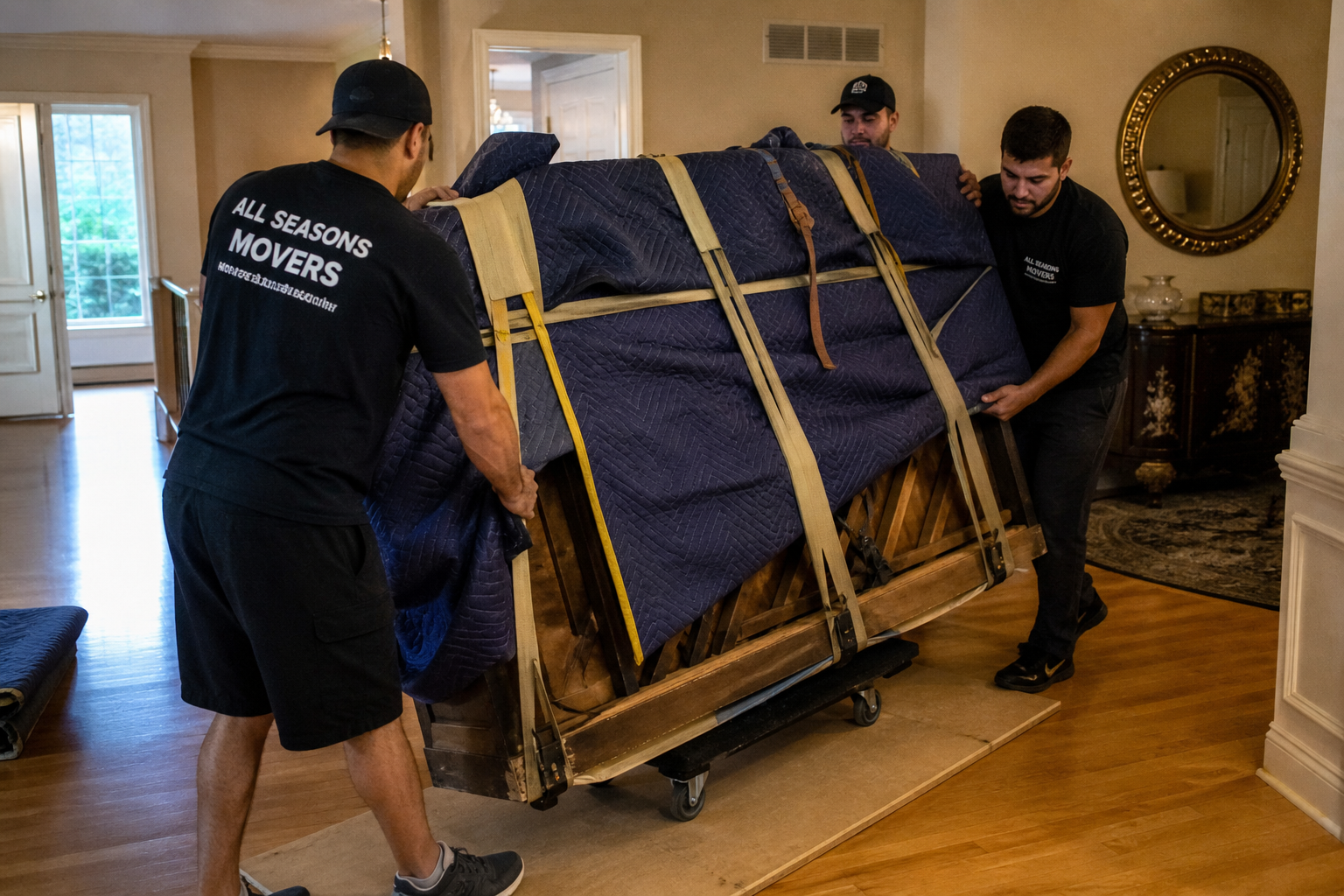
Upright pianos (also called vertical pianos)
These are the most common household pianos. They range from small spinets and consoles (around 300–400 lbs) to full upright studio pianos that can push 800 lbs. Moving an upright piano requires a piano dolly, moving straps, and at least 2–3 experienced movers. The challenge here is usually stairs, tight hallways, and doorframe clearances — all very common in Chicago's older buildings and walkups.
Baby grand and grand pianos
This is where things get genuinely complex. Moving a grand piano requires disassembly — the legs come off, the lid is removed, the pedal lyre is detached, and the body is placed on its side on a specialized skid board. A baby grand weighs 500–600 lbs; a full concert grand can exceed 1,200 lbs. This is not a job for friends with a pickup truck. Period.
Digital and electric pianos
These are significantly lighter (50–200 lbs) and far easier to move. Standard movers can usually handle these. However, if yours is a full-size weighted digital piano with a heavy cabinet, treat it more like an upright don't toss it in the back of a van unsecured.
Can You Move a Piano Yourself? The Honest Truth
Technically? Yes. Should you? Almost certainly not — and here's why that matters beyond just "it's heavy."
Pianos have a high center of gravity. They tip easily, especially on ramps, stairs, or uneven surfaces. One slip and you're looking at a crushed foot, a broken instrument, or a damaged wall — or all three at once. Beyond the physical risk, pianos are sensitive instruments. Rough handling — even if nothing visibly breaks — can knock the soundboard out of alignment, shift internal strings, or crack the pinblock. You won't notice the damage until you try to tune it and realize it won't hold pitch anymore.
DIY piano moving makes sense only in very specific situations — moving a lightweight digital piano across a flat surface with no stairs, for example. Anything else involving an acoustic piano, stairs, a truck, or a tight Chicago apartment building? Hire professionals. The cost of professional piano movers is almost always less than the cost of repairing a damaged piano.
How Professional Piano Movers Actually Move a Piano
Here's exactly what a qualified piano moving crew does from start to finish, so you know what you're paying for and what to expect on moving day.
Pre-move assessment
The crew assesses the piano type, dimensions, weight, and the route — doorways, stairways, hallways, elevator access, parking situation for the truck. Nothing is improvised.
Keyboard and pedal protection
The keyboard lid is locked or secured. Pedals are wrapped. Any loose parts or accessories are removed and packed separately.
Wrapping and padding
The entire piano is wrapped in moving blankets and secured with stretch wrap or straps. No surface should be exposed to contact with walls, doorframes, or other items in the truck.
Grand piano disassembly (if applicable)
For grand pianos, legs and the pedal lyre are carefully removed, labeled, and wrapped individually. The body is lowered onto a padded skid board, which makes transport possible without the legs bearing the load.
Piano dolly and controlled movement
A heavy-duty piano dolly — not a furniture dolly — is used to move the instrument. Movers never drag or slide a piano across floors. Staircases require a stair-climbing dolly or a ramp system with controlled descent.
Loading and securing in the truck
The piano is always loaded last and unloaded first to minimize movement time on the truck. It's strapped against the truck wall — never sitting free where it can shift during transit.
Placement and reassembly at destination
At the new location, the process reverses. Grand piano legs are reattached, all protective wrapping is removed, and the instrument is positioned exactly where you want it before the crew leaves.
What Does Moving a Piano Cost in Chicago?
Piano moving costs in Chicago vary based on piano type, distance, stairs, and whether storage is involved. Here are real numbers to plan your budget:
How to Prepare Your Piano for Moving Day
You don't need to do much — but what you do matters. Here's your pre-move piano checklist:
Lock the keyboard lid if your piano has one. This prevents keys from shifting during transit. Remove any items sitting on top of the piano — candles, photos, sheet music, metronomes. These will fall and could damage the finish. Measure doorways, hallways, and staircase widths at both locations and share these with your movers before moving day — not on the day itself. If your piano has a bench with storage, empty it completely. Clear a path from the piano to the exit — move rugs, furniture, and anything that could cause the crew to trip or lose grip. Know where you want the piano placed at the destination before the movers arrive. Repositioning a 600-lb instrument twice is nobody's idea of fun.
After the Move: What Happens to Your Piano Next
Here's something most people don't know — even a perfectly executed piano move requires a tuning afterward. Pianos are sensitive to temperature changes, humidity shifts, and the vibration of transit. All of these affect string tension. Your piano will likely be slightly out of tune after any move, even a short local one.
Wait at least 2–3 weeks after the move before scheduling a tuning. This gives the piano time to acclimatize to its new environment — temperature, humidity, airflow. Tuning too soon means you'll likely need to tune again shortly after. If your piano hasn't been tuned in over a year, it may need a pitch raise (a more intensive tuning process) before a standard tuning is possible. Budget $100–$200 for a professional tuning in Chicago.
Red Flags When Hiring a Piano Mover in Chicago
Not every "mover" who says they move pianos actually knows what they're doing. Watch for these warning signs before you hand over your instrument:
They give you a quote without asking what type of piano you have. They don't ask about stairs, elevator access, or parking at both locations. They can't tell you what specific equipment they use for pianos. They offer a significantly lower price than every other quote — this usually means corners being cut. They have no reviews mentioning piano moves specifically. They don't offer any form of damage coverage or insurance for the instrument.
Frequently Asked Questions About Moving a Piano
How many people does it take to move a piano?
At minimum, 2 people for a small upright on flat ground. A standard upright typically requires 3. A grand piano should have 3–4 experienced movers — not because of raw strength alone, but because of the coordination required to navigate the instrument through tight spaces safely.
Can movers damage a piano?
Yes — if they're not trained specifically in piano moving. Standard moving crews handle furniture and boxes daily but rarely encounter the weight distribution challenges of a piano. Always hire movers with specific piano moving experience and verify their reviews mention pianos by name.
Does moving a piano affect its tuning?
Yes, always. Even a short local move will require a tuning afterward. The vibration of transit and change in environment (temperature and humidity) affects string tension. Wait 2–3 weeks before tuning to let the piano settle in its new home.
Can a piano be stored after moving?
Yes, but only in a climate-controlled facility. Standard storage units expose the piano to extreme temperatures and humidity that will cause serious damage — warped wood, cracked soundboards, stuck keys. Always ask if storage is temperature and humidity controlled before agreeing to it.
Is it worth moving an old piano or should I donate it?
Depends on the piano's condition and sentimental value. If it hasn't been tuned in years, has broken strings or sticky keys, and isn't particularly valuable, the cost of moving plus reconditioning might exceed its worth. Get a piano technician to assess it before spending money on a move. If it's in good condition or has deep family history — move it.
Moving a Piano in Chicago? All Seasons Movers Has You Covered
At All Seasons Movers, piano moving is something we take seriously — because we know what it means to you. Whether it's a studio upright that's been in your living room for years or a baby grand that needs careful disassembly and white-glove handling, our trained piano moving crew knows exactly what to do.
We serve all of Chicago and surrounding areas, year-round — which means winter moves, summer moves, walkup buildings, elevator buildings, and everything in between. No job is too complex when you have the right team and the right equipment.