












Movers and Packers Chicago IL: How to Hire the Right Crew
Movers and Packers Chicago IL: How to Hire the Right Crew Without Overpaying
Searching for movers and packers Chicago IL usually means one thing: your move date is close and you need help you can trust. Between lake effect winters, tight alley loading, and high rise elevator rules, Chicago moves rarely go the way a quote sheet says they will. This guide shows you exactly what to look for, what to ask, and how to avoid the mistakes that cost Chicago families time and money.

What Movers and Packers in Chicago Actually Do
Many people assume packing is a bonus add on. In Chicago, it is often the smartest part of the job. Here is what a full crew typically handles:
Packing: Professional packers wrap dishes, fragile decor, and artwork with proper materials so nothing shifts on the truck.
Loading: Trained movers protect floors, doorways, and furniture corners while loading.
Transport: Your belongings travel across the city or to the suburbs in a clean, properly sized truck.
Unloading and setup: Furniture is reassembled and boxes are placed in the correct rooms.
The Chicago Factors Most Guides Ignore
Most articles list generic tips. Chicago has quirks that change your price and your timeline:
1. Building Rules and Elevator Reservations
Loop, River North, and Lincoln Park high rises often require a certificate of insurance and a booked elevator window. Ask your movers if they handle this paperwork for you.
2. Parking, Permits, and Tight Streets
Street parking near a Chicago address can be limited. A crew that plans the truck placement in advance saves you long carrying distances, and long carrying distances can raise your bill.
3. Weather and Seasonal Timing
Winter snow and summer heat both affect a move. Book early for May through September, since demand peaks. Winter dates are often easier to secure and can be friendlier to your budget.
How to Vet Movers and Packers in Chicago, IL
Use this quick checklist before you sign anything:
License and insurance: Confirm the company is licensed with the Illinois Commerce Commission and carries proper coverage.
Written estimate: Insist on an itemized quote that lists labor, packing materials, and any extra fees.
Real reviews: Look for recent feedback that mentions punctuality, care, and communication.
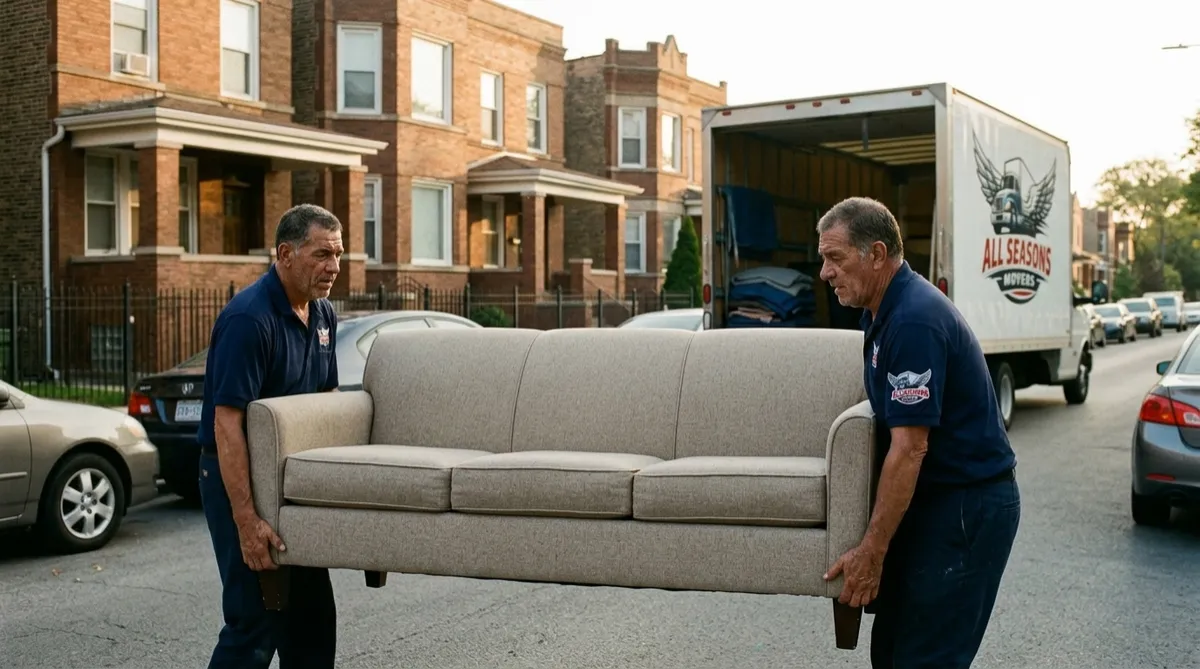
Uniformed, trained crews: Employees, not day laborers, show up on time and know how to handle your belongings.
Clear damage policy: Ask what happens if something breaks and how claims are handled.

Red Flags That Should Make You Walk Away
A price quoted over the phone with no home or video survey.
A large cash deposit demanded upfront.
No company name or logo on the truck.
Vague answers about insurance or licensing.
What Affects the Cost of Packers and Movers
Chicago pricing depends on a handful of factors, so understanding them helps you compare quotes fairly:
Home size and inventory: More items mean more crew hours.
Packing scope: Full packing costs more than packing only kitchens and fragile rooms.
Stairs and access: Walk ups, long hallways, and elevators change labor time.
Distance and date: Weekends and month end dates usually cost more.
Specialty items: Pianos, safes, and oversized furniture need extra care and equipment.
Smart Ways to Save Without Cutting Corners
Declutter before packing day. Every box you remove is labor you do not pay for.
Pack low risk rooms yourself and hire pros for kitchens and art.
Book mid month and midweek when crews have more availability.
Reserve parking and elevators early to avoid delays.
A Sample Moving Day Timeline in Chicago
Knowing what to expect keeps stress low. A typical two bedroom move looks like this:
7:30 AM: The crew arrives, walks the home, and confirms the plan with you.
8:00 AM: Furniture is padded and wrapped, and boxes are staged by room.
11:00 AM: The truck is loaded and secured for the drive.
1:00 PM: Unloading begins, with furniture placed where you want it.
4:00 PM: Beds are assembled, boxes are placed, and you sign off on the work.

Moving Within the City or Out to the Suburbs
Many Chicago customers move between neighborhoods like Wicker Park and Lakeview or head to suburbs such as Naperville, Evanston, and Schaumburg. Suburban moves often mean easier parking but longer drive time, while city moves mean shorter drives but more access challenges. Tell your movers about both ends of the trip so the estimate is accurate.
Questions to Ask Before You Book
Is the estimate binding or non binding?
Do you provide packing materials and labor together?
How do you handle delays or last minute changes?
Who is responsible for building paperwork?
Why Chicago Families Choose All Seasons Movers
All Seasons Movers has built its reputation on careful handling, honest communication, and crews who treat your home like their own. Every customer receives a clear, written estimate, and every crew member arrives in uniform, trained, and ready to work. Whether you need help with a studio apartment downtown, a family house in the suburbs, or professional packing for a delicate collection, the team tailors the service to your needs rather than forcing you into a fixed package.
Here is what that looks like in practice:
Transparent pricing with no surprise fees.
Careful packing and protective wrapping for every item.
Reliable arrival times and respectful crews.
Ready to Book Your Chicago Move?
Finding trustworthy movers and packers in Chicago, IL does not have to feel overwhelming. Compare licensed companies, insist on written estimates, plan around building rules, and book early for busy seasons. Do those four things and you will avoid the most common mistakes.
The cheapest quote is rarely the best value, because damage, delays, and hidden fees add up quickly. A fair price from a reliable team protects your entire budget.
When you are ready for a stress free move with a crew that respects your time and belongings, request your free estimate today and let the professionals handle the heavy lifting. Your new chapter in Chicago or beyond should start with a smooth, safe, and simple moving day.