












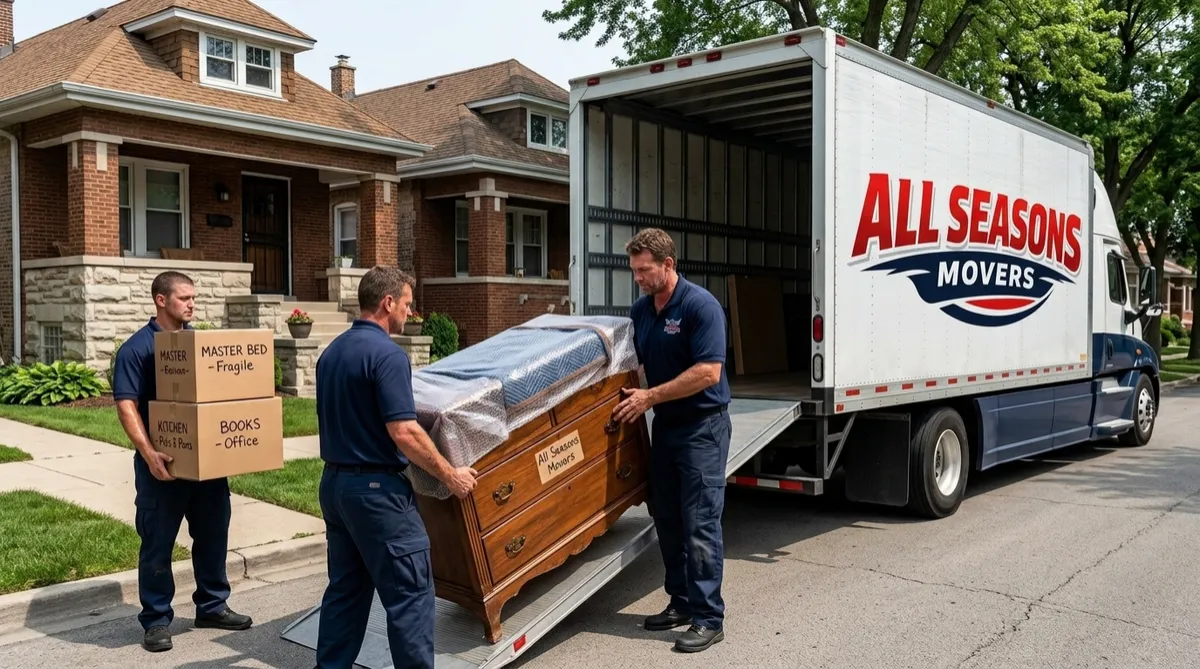
Local Movers Chicago: How Hourly Pricing Actually Works in 2026
Local Movers Chicago: How Hourly Pricing Actually Works
If you're searching for local movers in Chicago, chances are you've already noticed something confusing. Every company quotes differently, some give you a flat number, some talk in hourly rates, and none of it seems to line up until you understand the model underneath it. Local moves in Illinois are billed by the hour and by crew size, not by weight like a long distance move. Once you understand how that clock actually runs, you can spot a fair quote instantly and avoid paying for hours you never needed.

What "Local" Actually Means
In Illinois, a move is generally classified as local when it stays within the state and under roughly 100 miles. That single distinction changes everything about how you're charged.
Local moves are priced by the hour, based on crew size and time on site.
Long distance moves are priced by shipment weight and total mileage.
Labor only moves (you drive the truck, they load or unload) are billed hourly at a lower crew size.
If a company you're comparing quotes weight or mileage for a move across town, that's usually a sign they're not set up for true local jobs.
How the Hourly Clock Actually Works
Here's the part most people get wrong. The hourly rate isn't just labor, it's the whole crew and truck as a package.
Crew size sets the base rate. A two mover crew typically runs lower per hour than a four mover crew, but a bigger crew often finishes faster, so the total can land similar.
Most companies have a minimum. Two to three hours minimum is standard across Chicago, even for a small studio.
Travel time is usually billed too. Many movers charge for the time it takes the truck to reach you and to return to the yard, not just the time spent loading.
The clock starts and stops at your door, not when the truck leaves the warehouse, in most transparent pricing models.
Ask any company you're vetting to explain exactly when their clock starts and what counts as travel time. If they hesitate, that's your answer.
What a Local Chicago Move Typically Costs
Based on crew size and typical job length, here's a general range for local Chicago moves.
Home Size | Crew | Typical Hours | Estimated Total |
|---|---|---|---|
Studio / 1 bedroom | 2 movers | 3 to 4 hours | $400 to $700 |
2 bedroom apartment | 3 movers | 4 to 6 hours | $700 to $1,300 |
3 bedroom home | 3 to 4 movers | 6 to 8 hours | $1,200 to $2,000 |
4+ bedroom home | 4 to 5 movers | 8 to 12 hours | $2,000 to $3,500 |
These numbers shift based on stairs, elevator waits, and how far the truck has to park from your door.

Five Things That Add Hours to Your Bill
Square footage isn't actually the biggest factor, access is.
Stairs without an elevator. Every flight adds real time, especially in Chicago's classic three flats.
A long carry. If the truck can't park close to your entrance, every trip takes longer.
Unboxed items. A crew that has to wrap and pack loose belongings on site will always take longer than one moving pre packed boxes.
Building logistics. Certificate of insurance requirements, loading dock reservations, and elevator time slots in high rises can add wait time that gets billed.
Disassembly needs. Bed frames, sectional sofas, and large shelving units take extra hands and extra minutes.
How to Keep Your Local Move Affordable
A few practical moves make a real difference on the final invoice.
Book midweek if you can. Weekends and the last few days of the month are the busiest and priciest windows across Chicagoland.
Pack everything before the crew arrives. This alone can save an hour or more depending on home size.
Clear a path. Stage boxes near the door and keep hallways and stairwells clear.
Ask about a not to exceed quote. Some companies will cap your total once they've seen your inventory, protecting you from an open ended clock.
Confirm parking in advance. If you're in a building with permit parking, reserving a spot ahead of time avoids a long carry fee.
What to Ask Before You Book
Before signing anything, get clear answers to these:
What is your hourly rate per crew size, and is there a minimum?
Do you charge travel time, and how is it calculated?
Is there a cap or not to exceed price for my move?
Are packing materials included or billed separately?
What happens if the move runs longer than estimated?

Working With a Team That Actually Explains the Bill
This kind of clarity is exactly what most local moving quotes in Chicago fail to give you upfront. All Seasons Movers builds every local estimate around your actual home size and access points, not a vague hourly guess, so you know your crew size, your minimum, and your travel policy before moving day even starts. That transparency is what keeps a local move from turning into a surprise invoice.
The Bottom Line
Local moving in Chicago comes down to one simple equation: crew size multiplied by hours, plus whatever access challenges show up along the way. Understand that equation, ask the right questions before you book, and you'll walk into moving day with a number you can actually trust instead of one that grows once the truck arrives.