


How to Pack Pots and Pans for Moving Without Scratching Them
How to Pack Pots and Pans for Moving Without Scratching Nonstick Coating
Pots and pans survive a lot in the kitchen. They don't survive being stacked metal on metal in a moving box nearly as well.
Most packing guides treat cookware like any other heavy kitchen item, wrap it in paper, stack it, and seal the box. But if you've got a nonstick skillet, a seasoned cast iron pan, or anything with a coated surface, packing it the wrong way can scratch or scuff finishes that took years to build up, or that cost real money to replace. Here's how to pack pots and pans for moving the right way, with the coating itself as the priority, not an afterthought.
Why Pots and Pans Need More Care Than Just Wrapping
Cookware is heavy, dense, and often nests together naturally by size, which is exactly what makes it risky to pack carelessly. When pans get stacked directly against each other without a barrier, the metal or ceramic surfaces rub and grind against one another during loading, transport, and unloading. For stainless steel, that's mostly cosmetic. For nonstick, cast iron seasoning, or anodized aluminum, that contact can genuinely damage the cooking surface.
The fix isn't complicated. It just means adding a layer of protection between every stacked piece, rather than relying on paper wrapped around the outside to do all the work.
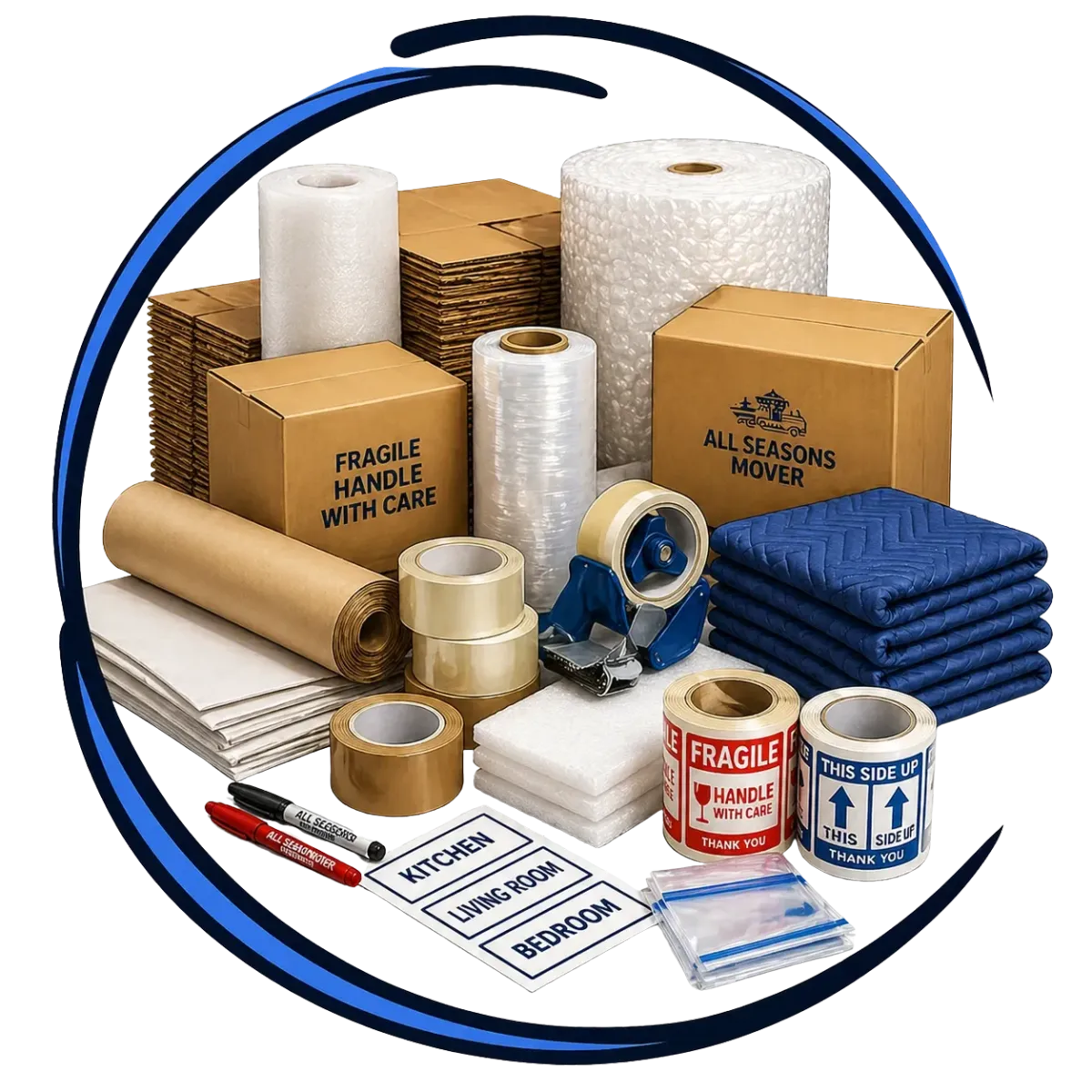
What You Need
Medium sized boxes or dish pack boxes, since oversized boxes make heavy cookware harder to lift safely
Packing paper, or clean dish towels and cloth napkins if you'd rather use what you already own
Packing tape, with extra reinforcement for the box bottom
A permanent marker
Felt pan protectors or soft cloth, specifically for nonstick and cast iron pieces
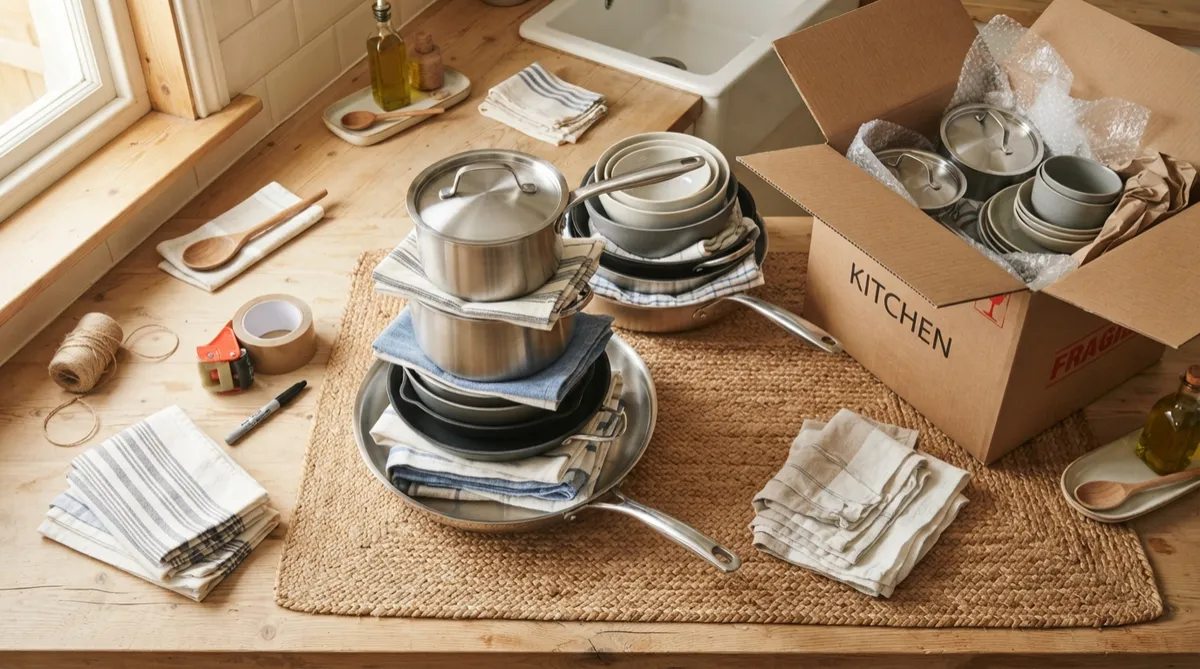
Cookware is one of the few kitchen categories where household substitutes genuinely work as well as bought supplies. Dish towels between stacked pans do the same protective job as felt pan protectors, so don't feel like you need to buy anything specialized unless you'd rather.
How to Pack Pots and Pans for Moving Step by Step
1. Clean and dry everything first. Cookware should be completely clean and fully dry before it's wrapped. Any leftover moisture trapped inside a nested stack for days can lead to rust on cast iron or a musty smell on other pieces.
2. Reinforce the box. Double tape the bottom seam of your box before loading anything, since a box full of cookware is significantly heavier than a typical moving box and needs a sturdier base.
3. Add a cushioned base layer. Line the bottom of the box with two to three inches of crumpled paper or a folded towel before placing any cookware inside.
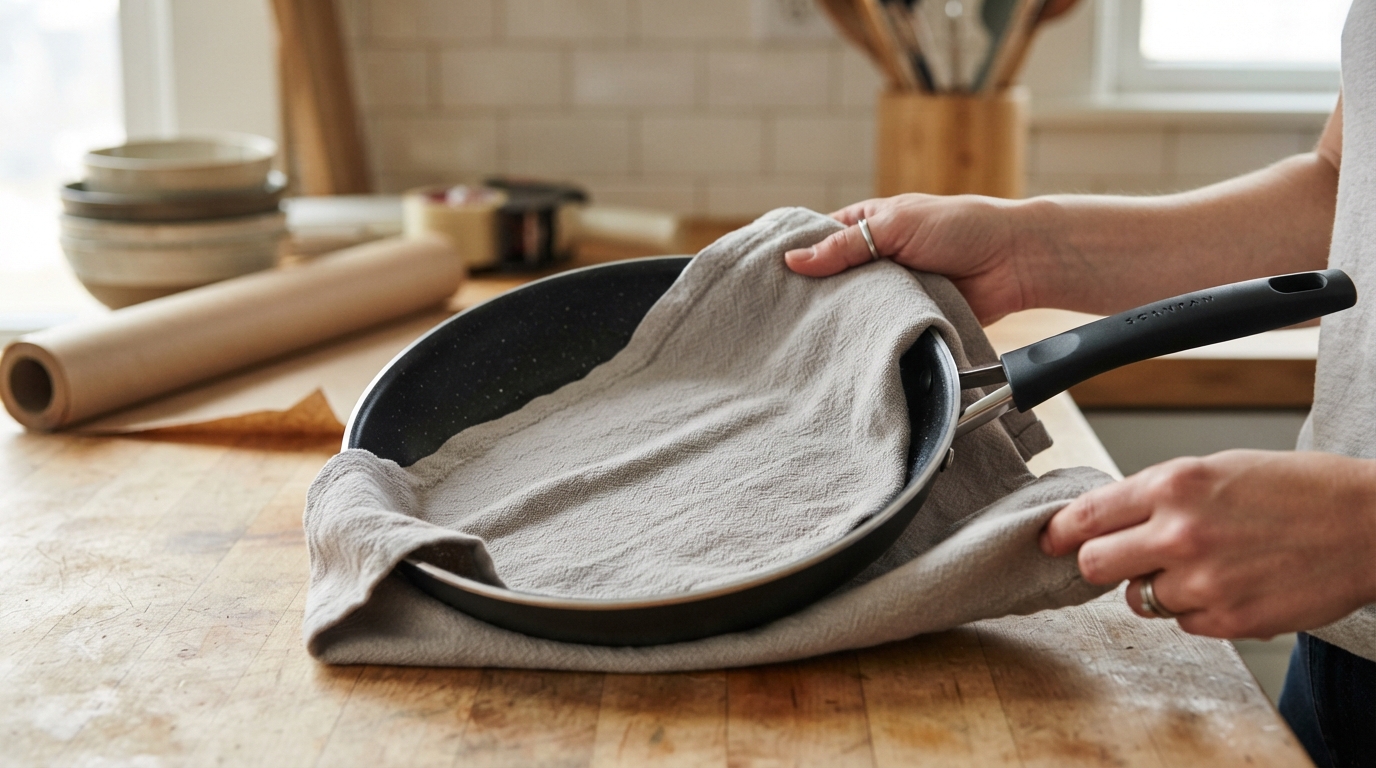
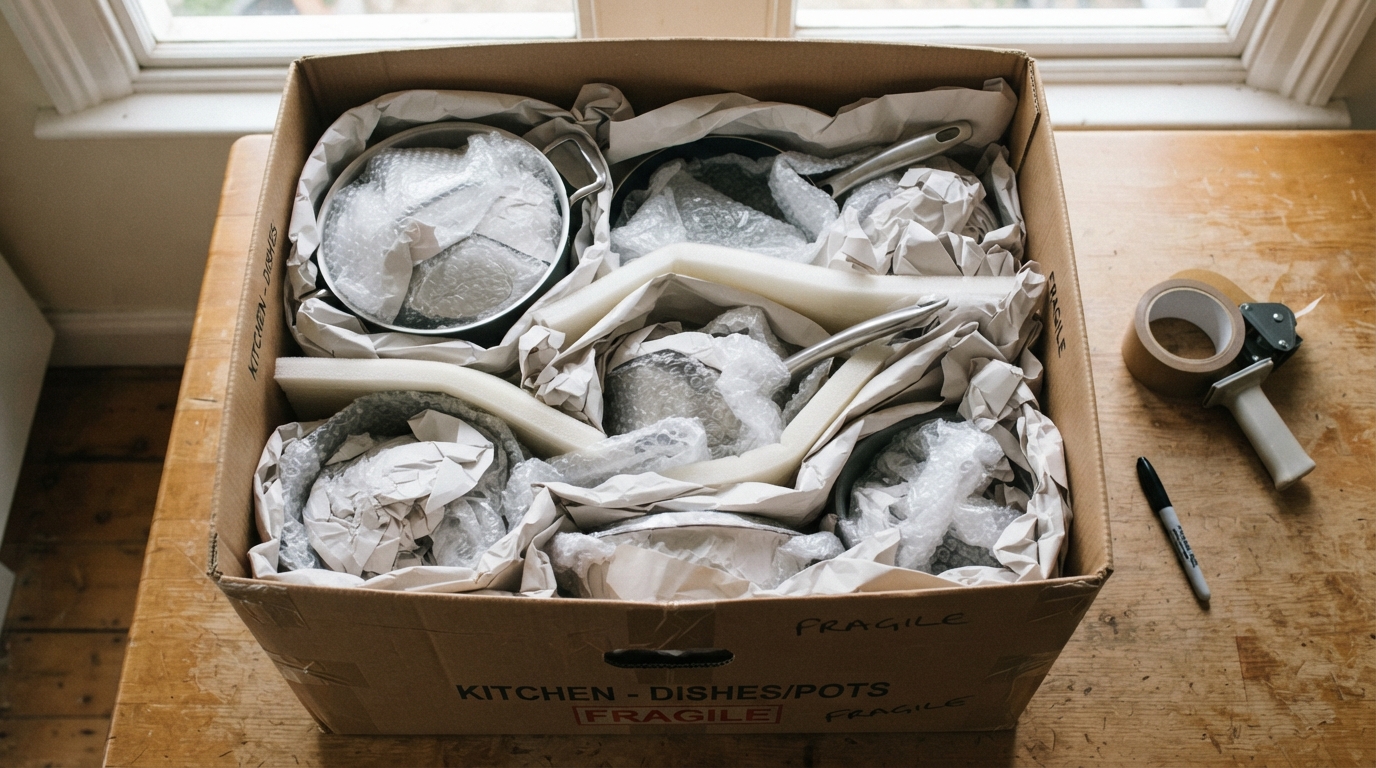
4. Wrap the outside of each piece. Wrap each pot or pan individually in packing paper or a towel before nesting anything together. This protects the outer surface from scuffs during loading and transport.
5. Place a barrier between nested pieces. Add a layer of packing paper or a folded dish towel between each pan before stacking them inside each other. This single step is what actually prevents scratching, and it's the part most packing guides skip.
6. Load heaviest items first. Place the largest, heaviest pots at the bottom of the box, working up to lighter pieces, so nothing crushes what's underneath.
7. Fill gaps and seal. Stuff any remaining space with crumpled paper or rolled towels so nothing shifts, then seal the box and label it clearly.
Protecting Nonstick, Cast Iron, and Copper Cookware Specifically
Different cookware materials need slightly different handling:
Nonstick pans are the most vulnerable to scratching. Always place a soft barrier, felt, a folded towel, or packing paper, between every nonstick surface and anything touching it, including lids.
Cast iron is heavy and durable, but its seasoning can be damaged by moisture or by scraping against another rough surface. Make sure cast iron is completely dry before packing, and wrap it separately from anything with a delicate coating, since cast iron's weight and texture can scratch softer surfaces it's stacked against.
Copper cookware tarnishes easily and shows scratches more visibly than stainless steel. Wrap copper pieces individually in soft cloth or tissue paper, and avoid letting them touch other metal directly, even briefly, during packing.
Stainless steel is the most forgiving material here, but it still benefits from a paper or towel barrier when nested, since even stainless can pick up surface scuffs over a long move.
How to Nest Pots and Pans Without Scratching Anything
Nesting pots and pans inside each other is a smart way to save box space, but only if you're doing it with padding between each layer. Stack pans by size, largest on the bottom, with a folded towel or sheet of packing paper between every piece, not just at the top and bottom of the stack. Avoid nesting more than three or four pieces in a single stack, since a taller nested column adds pressure and instability inside the box.
Weight Limits: Why Bigger Boxes Aren't Always Better
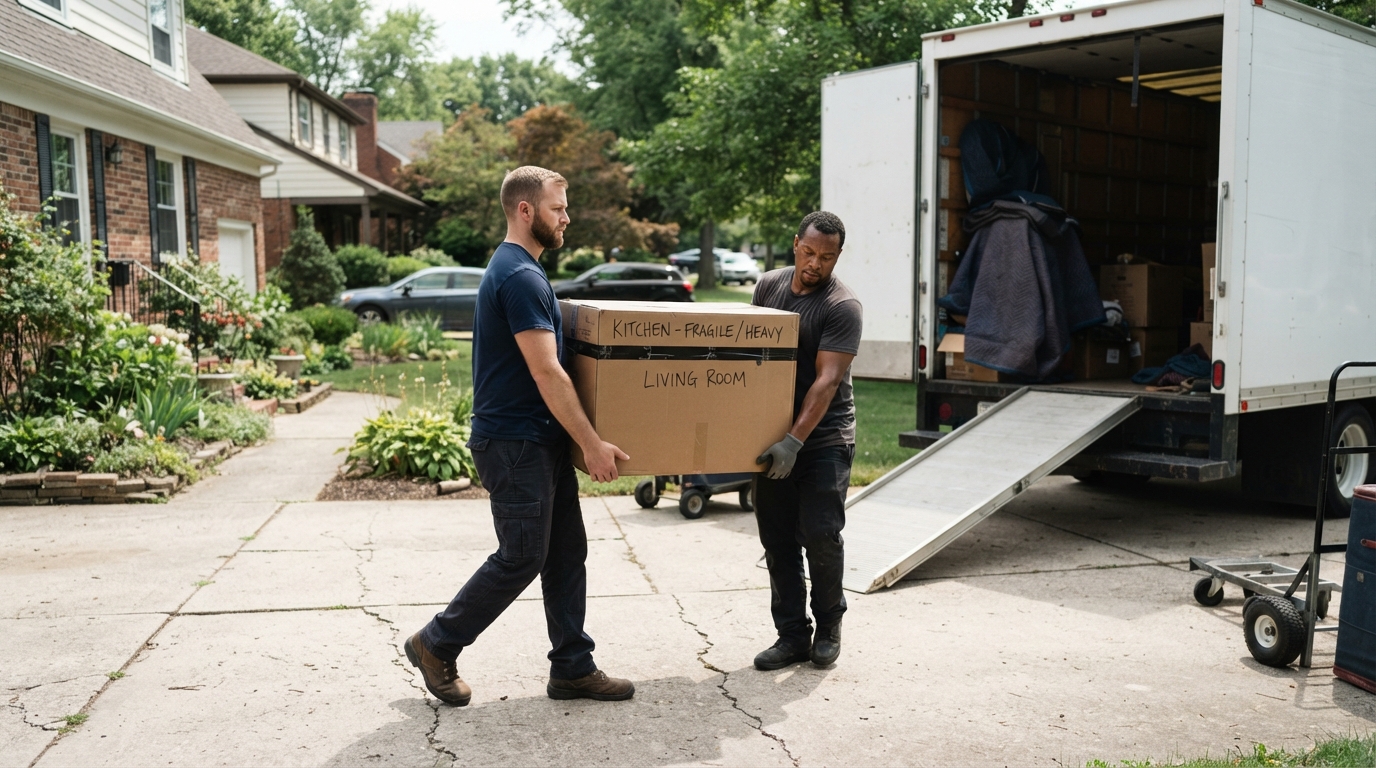
It's tempting to load one large box with all your cookware to save time, but this is one of the most common packing mistakes people make. A box packed full of pots and pans can easily exceed forty pounds, which makes it both harder to carry safely and more likely to have its bottom give out mid move. Aim to keep cookware boxes under roughly thirty five pounds, and use a sturdy dish pack box rather than a standard medium box if you're packing particularly heavy pieces like Dutch ovens or cast iron skillets.
What to Do With Lids and Loose Parts
Pot lids, especially glass ones, deserve their own attention rather than getting tossed on top of the stack. Wrap glass lids individually with extra padding, since they're more fragile than the cookware itself. Group lids by size and pack them standing up along the side of the box rather than flat, which reduces the chance of pressure cracking a glass lid during transit.
Common Mistakes People Make Packing Pots and Pans
Stacking pans directly against each other with no barrier. This is the single biggest cause of scratched nonstick and coated surfaces.
Packing everything into one oversized, overweight box. Heavy boxes are harder to carry and more likely to fail structurally.
Wrapping cast iron while it's still slightly damp. This leads to rust before you even unpack.
Tossing glass lids in loose. They're more fragile than most people assume and need their own padding.
Skipping labels on heavy boxes. An unmarked heavy box is a real injury risk for whoever picks it up next.
If your kitchen has a full set of cookware and the idea of wrapping every piece individually sounds like more time than you have, All Seasons Movers offers professional packing services in Chicago that handle kitchens properly, from delicate glassware to heavy cast iron, so nothing gets scratched or strained along the way.
FAQ: Packing Pots and Pans for a Move
Can I nest pots and pans together when packing? Yes, as long as you place a barrier, like packing paper or a folded towel, between each nested piece to prevent scratching, especially with nonstick or coated cookware.
How do I keep nonstick pans from getting scratched during a move? Wrap each piece individually and add a soft layer, such as felt or a towel, between every stacked pan, including under and over any lids placed nearby.
Is it safe to pack cast iron while it's still a little damp? No. Cast iron needs to be completely dry before packing, since trapped moisture leads to rust, sometimes within just a few days.
How heavy should a box of pots and pans be? Aim to keep cookware boxes under about thirty five pounds. Use a sturdy dish pack box for particularly heavy pieces rather than overloading a standard medium box.
Should glass pot lids be packed separately from the pots? It's safer to pack them separately with their own padding, standing upright along the side of the box rather than flat, to reduce the risk of pressure cracks.