








How to Label Moving Boxes: A 5 Part System for Faster Unpacking
How to Label Moving Boxes So Unpacking Takes Hours, Not Days
Picture your first night in the new place. The truck is empty, your back aches, and forty identical brown boxes stare back at you. One says “STUFF.” Another says “MISC.” You just need a phone charger, and nobody knows where it went.
Learning how to label moving boxes properly is the cheapest way to avoid that scene. A good system costs a few dollars in supplies and saves hours of searching. Here is the method we teach customers at All Seasons Movers, built from years of watching what actually helps our crews and what does not.
Why Most Box Labels Fail
Most people scribble a room name on the top flap and call it done. Then the boxes get stacked four high in the truck, the top flap disappears, and the label facing the wall might as well not exist. Many guides repeat the same advice about colors and markers, yet few explain what happens when movers handle dozens of boxes quickly. Your labels must be readable from the side, in a hurry, by a stranger.
The 5 Part Label That Works Every Time
Every label should answer five questions in the same order. Keep it short enough to read at arm’s length.
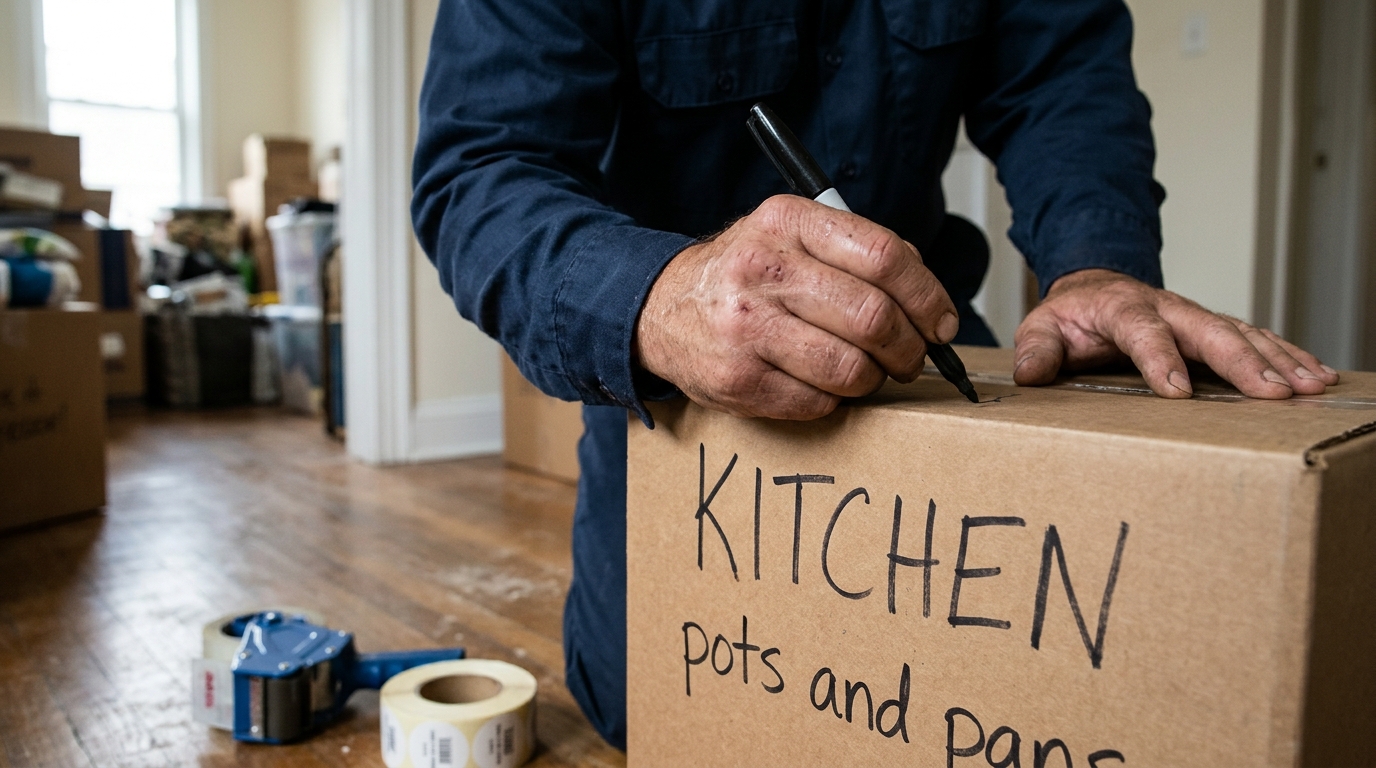
Destination room. Labeling boxes by room is the backbone of the system. Write where the box goes in the new home, not where it came from.
Contents. Be specific. “Kitchen: pots, baking sheets” beats “Kitchen stuff.”
Priority. Mark each box A, B or C. A means open tonight, B means open this week, C can wait.
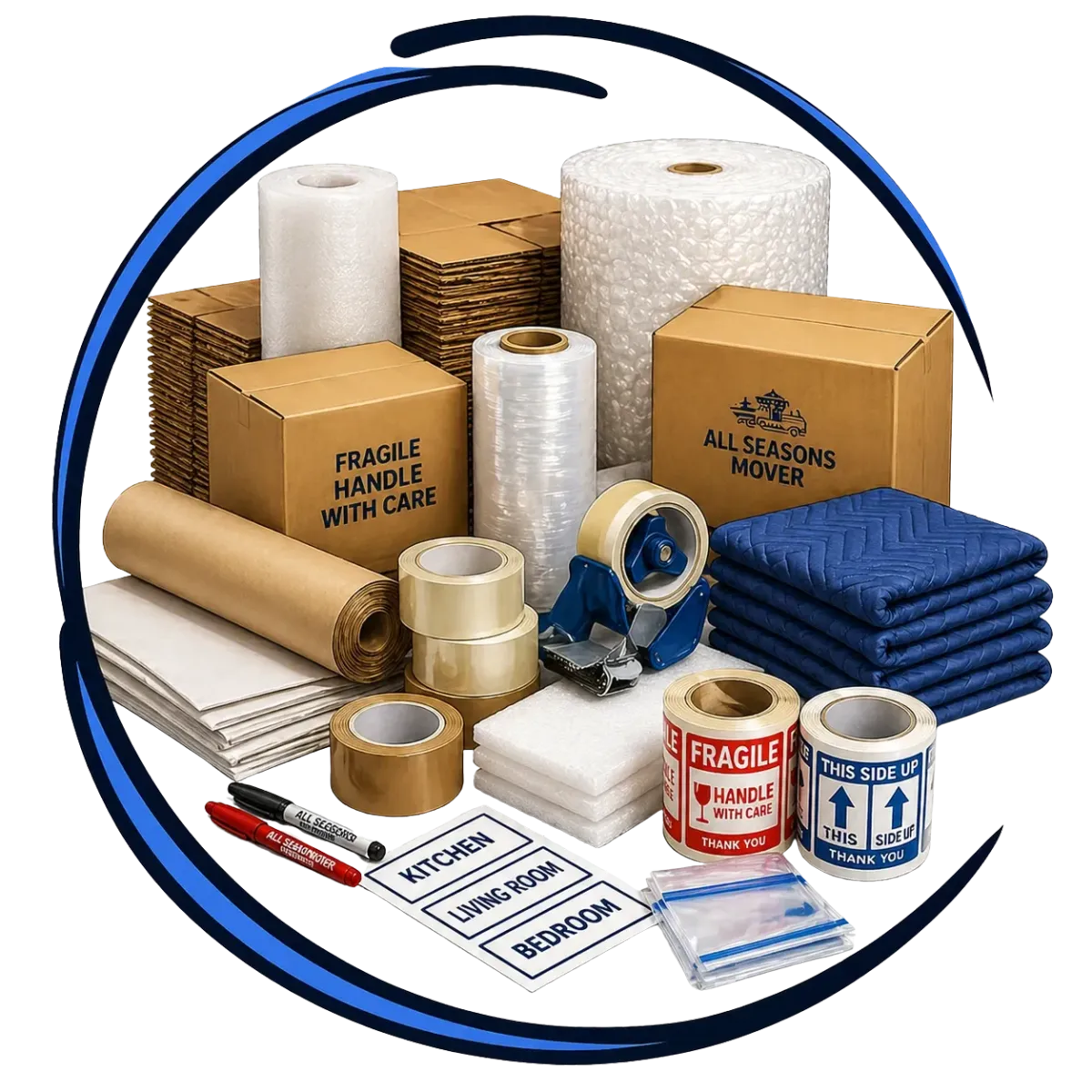
Handling. Add FRAGILE or HEAVY where it applies. Fragile box labels protect your dishes, and a HEAVY mark protects your movers’ backs.
Box number. Give every box a number and log it on your list.
Where to Put the Label
Place moving box labels on two adjacent sides and the top. Stacked boxes hide tops, and boxes pushed against a wall hide one side, so two sides guarantee a visible label. Skip the bottom entirely. Use a thick permanent marker or a printed sticker, and cover old labels on reused boxes so nobody opens the bathroom box looking for towels and finds canned soup. Coastal Moving Services makes the same point: placement matters as much as wording, and they suggest marking HEAVY on boxes over 30 pounds.
Colors, Numbers, or Both?
Color coding is popular because it works from across a room. Assign one color of tape or dot to each destination room, then tape a legend on the door of every room. MoveAdvisor points out that you may know orange means kitchen, but your helpers do not, so the key must be visible. Numbers add a second layer. Write the box number on two sides, then record contents on a simple sheet or phone note. Those moving inventory labels double as proof if a box goes missing. Use colors for speed and numbers for security.

Pack Smart Before You Label
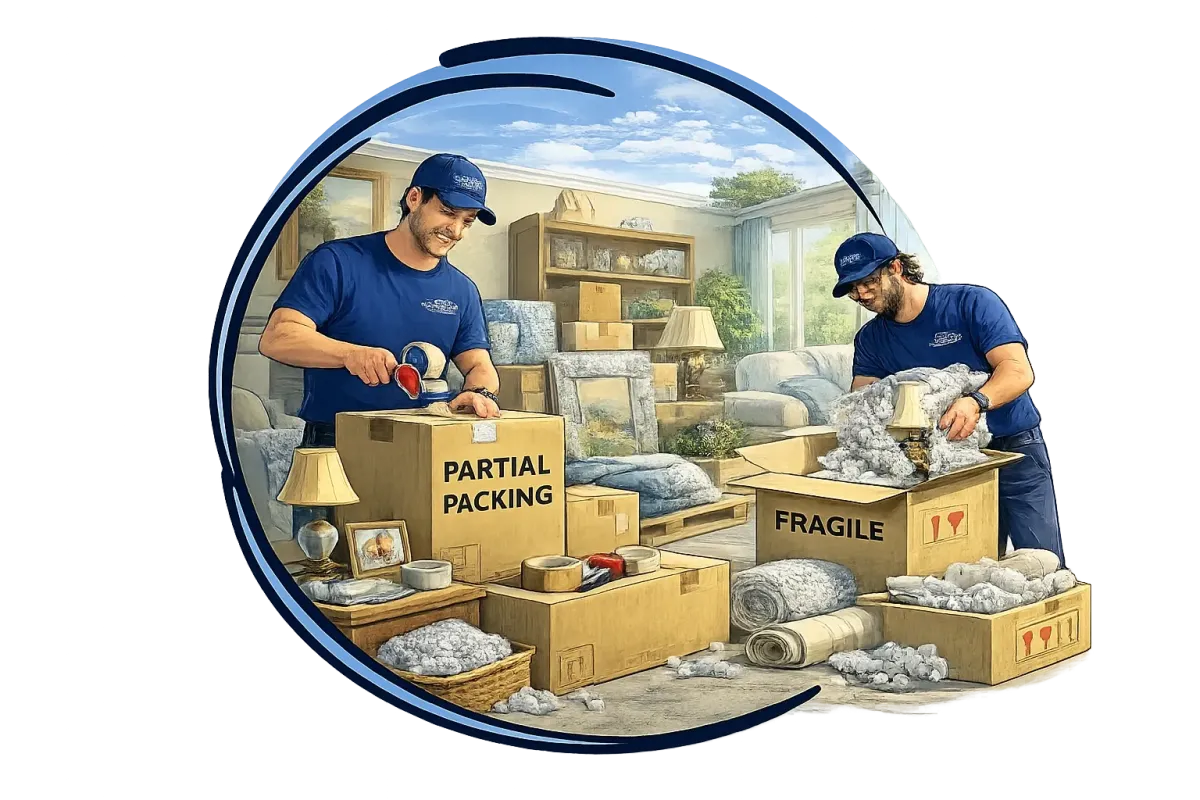
Good labels depend on good packing. Keep one room per box, because a box holding kitchen gadgets and garage tools cannot have an honest label. Pack heavy items in small boxes and label them HEAVY. Create an Open First box for the kettle, chargers, toiletries, bedding and medications. If you want help, our packing services in Chicago and this prep checklist cover the rest.
Why Labels Matter More in Chicago Right Now
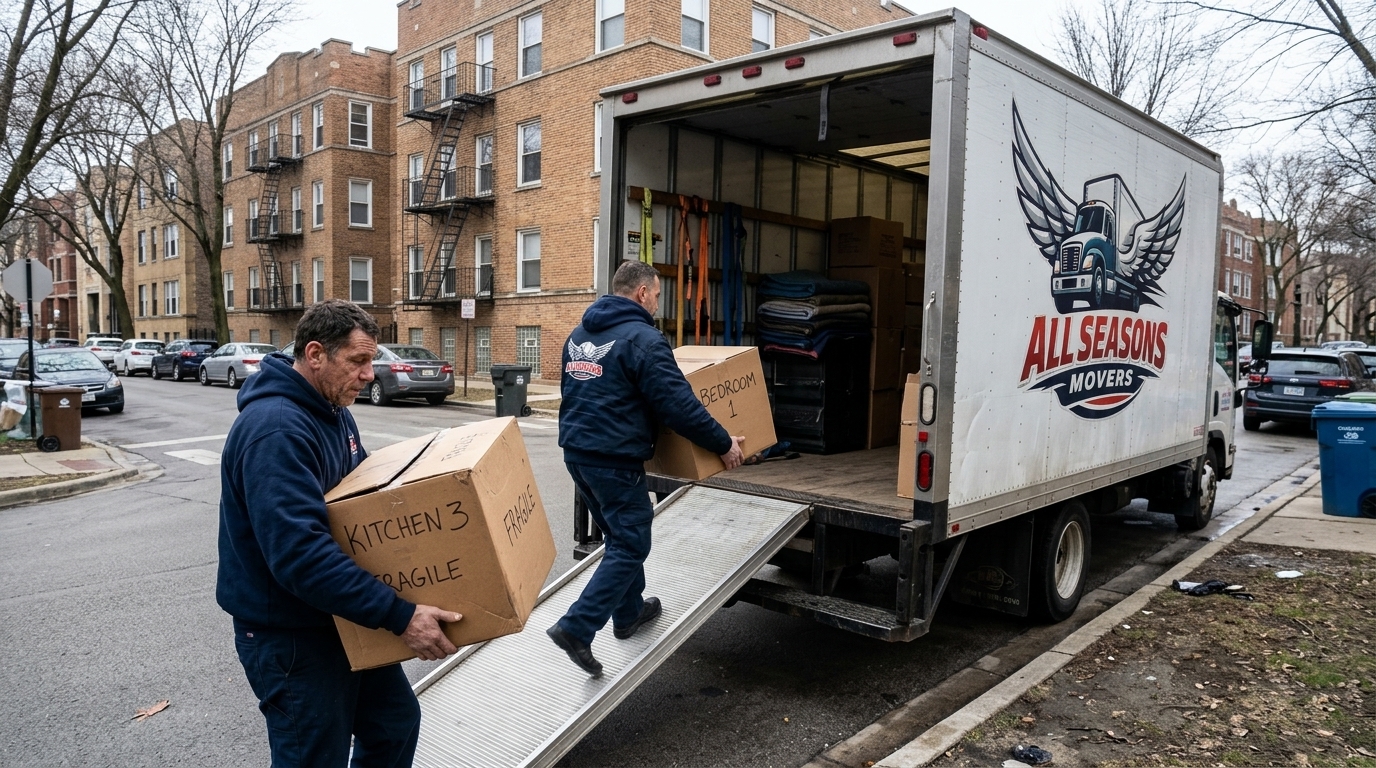
Chicago moves come with elevator reservations, narrow walkup stairs and loading dock windows that can be brutally short. Clear labels let a crew drop each box in the right room on the first try instead of making a second trip.
Fuel Costs Make Efficiency Count
Fuel is part of the story too. ABC7 Chicago reported that Chicago area gas prices climbed above $5 per gallon in September, with diesel near $6.50 nationally. FleetOwner, citing federal data, says national diesel eased to $6.127 in mid November, still about $2.29 above last year. When trucks burn that much fuel, a faster load and unload keeps your move on schedule and your bill predictable.
Common Labeling Mistakes to Skip
Vague words. “Misc” and “Stuff” tell nobody anything.
Top only labels. Stacking hides them, so use the sides too.
Waiting until later. Label right after sealing, while you still remember what is inside.
Fading ink. Use permanent waterproof markers because Chicago weather can turn fast.
Unpacking Day: Work the Labels in Reverse
Start with the A priority boxes, then do the kitchen and bathrooms, since they restore daily routines fastest. Cross numbers off your list as you open each box. Anything missing shows up immediately, which beats discovering a lost box weeks later. Break down and recycle boxes as you go so rooms clear quickly.
Prepare the New Home Too
Labels only work when the destination is just as clear. Before move day, tape a sheet with the room name on each door at the new place, and use the same words as your box labels. Furniture needs the same treatment. Stick painter’s tape on a headboard or sofa arm that says Guest Room, which protects finishes and removes guesswork. A quick walkthrough with the crew lead takes two minutes and prevents a day of rearranging.
Label Once, Unpack Fast
Great labels are simple: destination, contents, priority, handling and a number. Add them to two sides of every box, keep one room per box, and your unpacking will feel organized instead of chaotic. Knowing how to label moving boxes turns a stressful week into a manageable one.
Book Your Chicago Move
Ready for a stress free move? Call All Seasons Movers at (872) 465 8685 or visit our local movers in Chicago page for a free quote today. Our crews handle every labeled box carefully.