








Commercial Moving Services Chicago: Chinatown 60616 Business Move Guide
Commercial Moving Services in Chicago's Chinatown: Relocating Without Losing a Lunch Rush
In Chinatown, one lost Saturday can cost more than the moving truck itself. Dim sum crowds will not wait for your freezer to arrive, and regulars will not wait for your sign to go up. If you run a business in zip code 60616, the right commercial moving services Chicago offers must protect your revenue as carefully as your equipment.
At All Seasons Movers, we plan Chinatown relocations around your opening hours first and your boxes second. Here is what makes this neighborhood different and how to prepare.
Why Chinatown Is Not Like Any Other Chicago Move
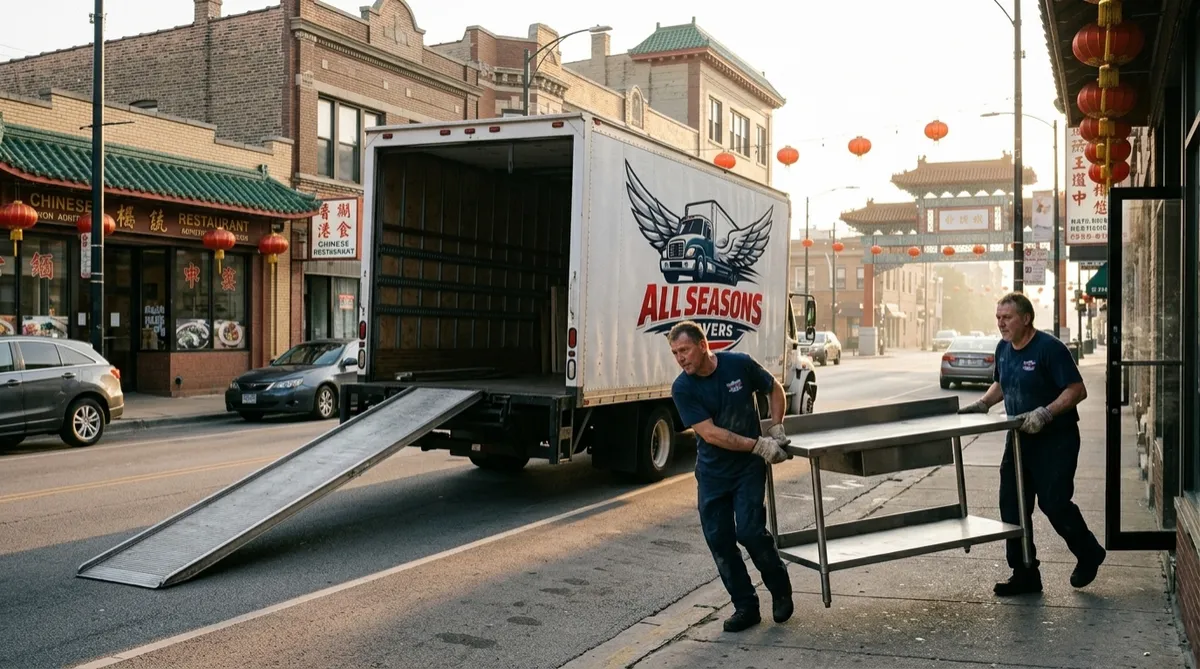
Chinatown is compact and busy. WTTW describes a densely packed area of about 30 blocks with 27,000 residents and more than 400 businesses. That density shapes every move. Wentworth Avenue is narrow, delivery traffic is constant, and a full size truck can block a lane in seconds. Crews used to suburban warehouses often arrive without a plan for that.
Access also changes by corner. The heart of the district sits at Cermak Road and Wentworth Avenue, while newer storefronts line Archer Avenue and Chinatown Square, which grew from a two level mall built on former railway land. Each address has its own dock, alley and elevator reality, so a walkthrough matters.
Four Chinatown Businesses and What Each Move Really Needs
1. Restaurants and Bakeries
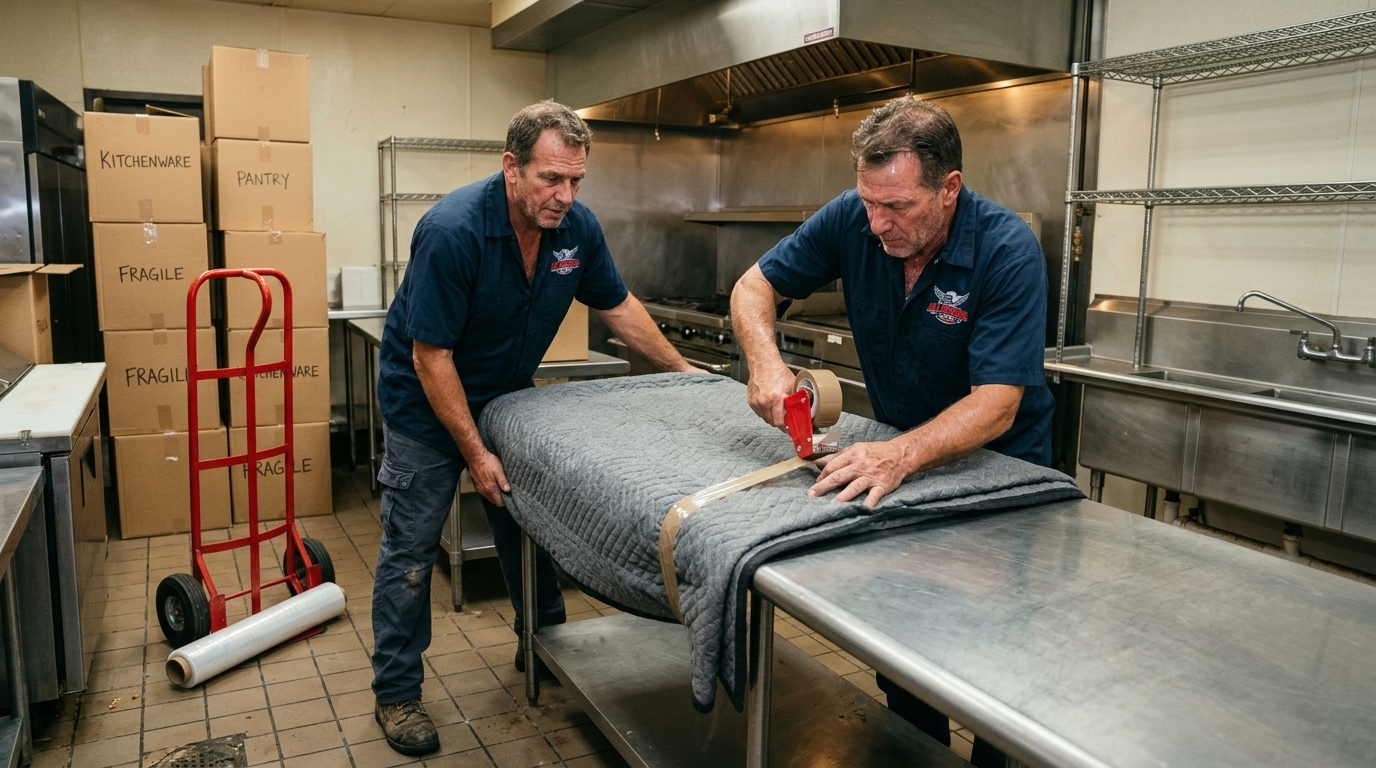
Commercial kitchens are the hardest. Walk in coolers, hood systems, range lines and prep tables need licensed trades to disconnect them before movers touch anything. Schedule the move for a slow Monday or Tuesday and shift food stock separately, ideally in a refrigerated unit.
2. Grocery and Herbal Shops
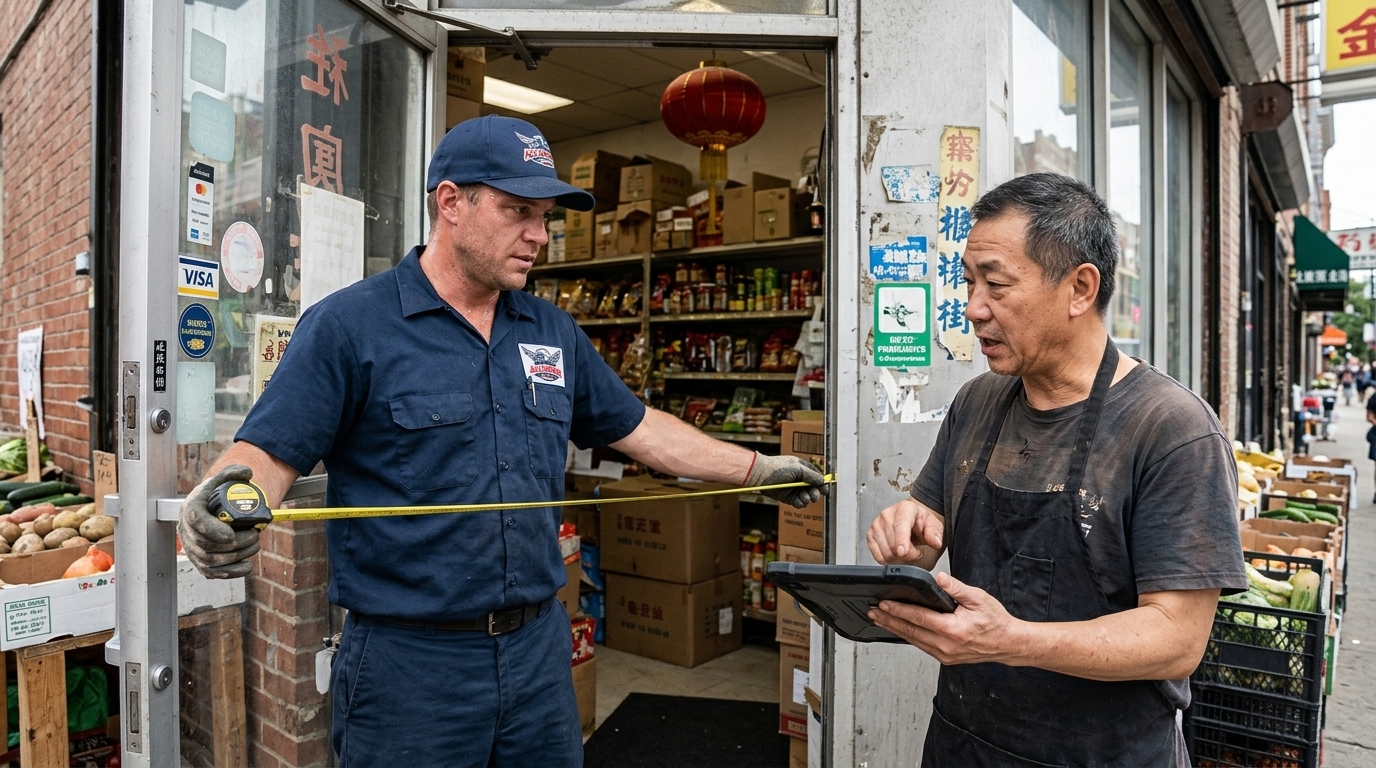
Shelving, glass counters and hundreds of small labeled items demand inventory control. Photograph every shelf before packing so reopening takes hours, not days.
3. Professional Offices
Accounting, law and insurance offices carry client files and computers that cannot go missing. Label by desk, back up your data, and move records in locked bins.
4. Wholesale and Import Shops
Pallets, heavy cartons and tight receiving windows call for a liftgate truck, pallet jacks and a clear schedule with your suppliers.
A Countdown That Keeps You Open
Strong commercial moving services Chicago businesses can trust follow a simple timeline:
Eight weeks out: walk both spaces and measure doors, elevators and hallways.
Four weeks out: confirm your crew, order supplies and send your landlord the insurance certificate.
Two weeks out: request street permits and start labeling by room.
Move week: pack storage items first and keep sales tools until last.
Day after: reassemble, test equipment and reopen.
Parking, Permits and the Wentworth Squeeze
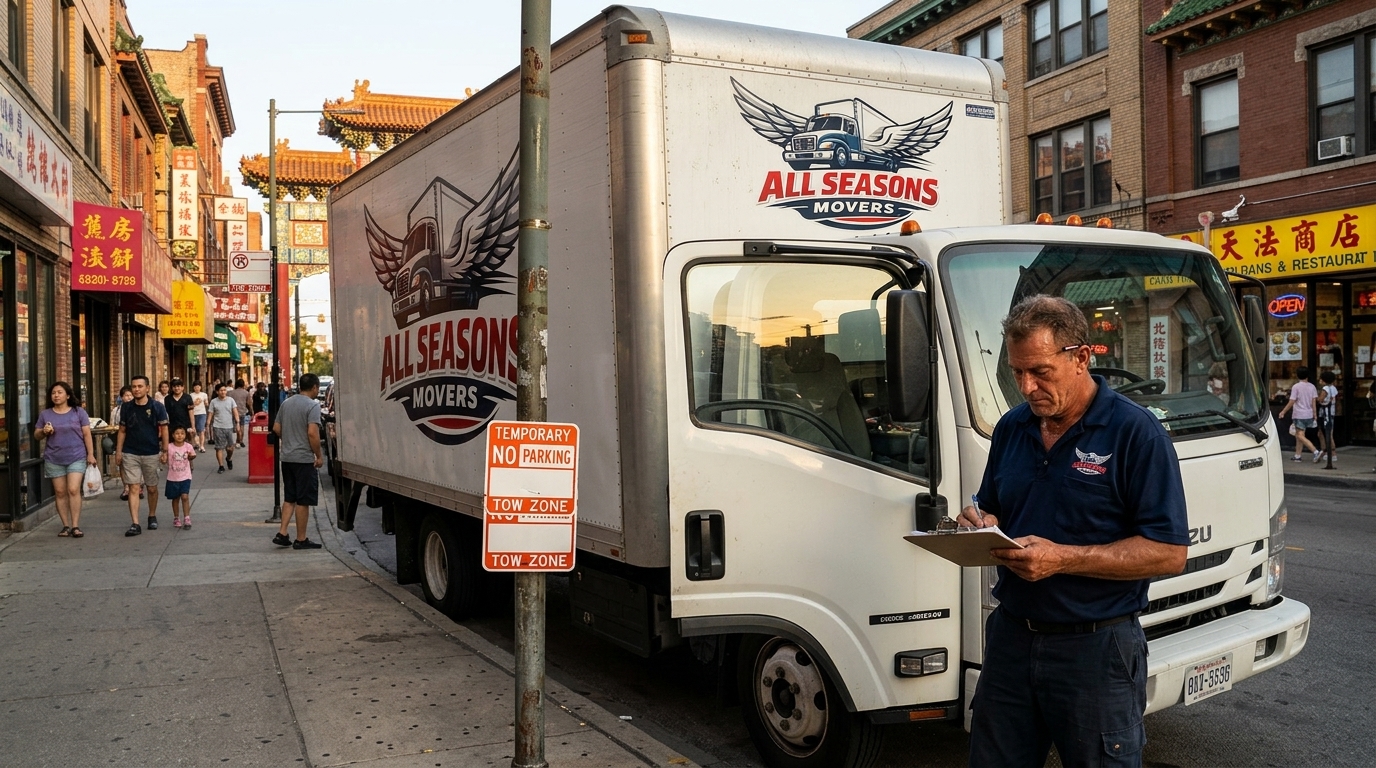
Street space is the hidden bottleneck. A truck on a public street generally needs a temporary No Parking permit from the Chicago Department of Transportation, and enforceable signs run about $25 each. Commercial vehicles may use posted loading zones for up to thirty minutes, which suits a delivery but not a full relocation. Apply early and post signs well ahead of move day.
Route planning helps too. The Dan Ryan and Stevenson expressways cross over the southern edge of Chinatown, and the Red Line stop at Cermak Chinatown runs around the clock, so your staff can reach the site at dawn without parking a single car.
Fuel and Freight: What Chicago's Diesel Spike Means for Your Quote
Fuel touches every moving bill. Chicago Sun Times reporting noted that the average diesel price in the Chicago area hit a record $6.30 a gallon on May 15, 2026, up 71 percent from a year earlier, based on GasBuddy data. Prices can move quickly, so ask every mover how fuel is handled. A written quote with a clear fuel line protects you from surprises, and efficient routing, with one truck packed properly instead of two half empty, keeps that line smaller.
Timing Your Move Around Festivals and Weekends
Chinatown has a rhythm. Weekend lunch brings the biggest crowds, and festival days can bring street closures and heavy foot traffic that make loading difficult. Check the neighborhood calendar before you lock a date, then choose a quiet weekday or an overnight window. A move that ends before your first customer arrives is a move that never cost you a sale.
Three Mistakes That Slow Chinatown Moves
First, skipping the walkthrough. Photos never show a tight stairwell or a low alley clearance. Second, booking the truck before the permit, which leaves you hoping for curb space. Third, packing the register and phones early. Keep the tools that earn money within reach until the final hour.
How to Choose Your Commercial Mover
Ask for a written estimate after an onsite visit, a certificate of insurance, and a plan for working around your peak hours. A mover who cannot explain how they will handle your loading dock, your elevator or your kitchen equipment has not looked closely enough.
A Move Planned Around Your Customers
Moving a Chinatown business is really a scheduling puzzle with heavy objects. The neighborhood is dense, the streets are tight, fuel costs are unpredictable and your customers expect you to be open. That is exactly why preparation beats speed. When the crew, the permit, the truck and the reopening plan all line up, the move becomes a quiet event rather than a crisis.
If you are ready to plan your Chinatown business move with a team that knows the area, reach out to All Seasons Movers for a walkthrough and a written estimate. Tell us your opening hours, your building type and your biggest worry, and we will build a schedule that respects all three. Your customers should never know you moved, except that your new space looks better.
Chinatown has thrived around Wentworth Avenue since 1912 because its businesses adapt. Your next location can be the best chapter yet, and a well planned move is how it begins. Let us handle all the heavy lifting.