













Commercial Movers Chicago: The Business Owner's No Downtime Moving Guide
Commercial Movers Chicago: How to Move Your Business Without Losing a Single Workday
Your office move isn't really about boxes. It's about making sure Monday morning still works. Phones ring, laptops boot up, clients get served, and nobody notices anything happened over the weekend.
That's the real test of good commercial movers Chicago companies get hired for. Not just "did the desks arrive," but "did the business keep breathing."
Most guides on this topic talk about experience and licensing and call it a day. Useful, sure, but it doesn't tell you what actually happens between the day you sign a lease at your new space and the day your team sits down at their new desks. So let's cover that.

Why Commercial Moves Are a Different Animal
A residential move is one household, one address, one timeline. A commercial move is dozens of moving parts happening at once.
Multiple stakeholders. IT, HR, ownership, and your landlord all need to be on the same page.
Building logistics. Loading docks, freight elevator bookings, and parking permits in the Loop or River North can make or break your schedule.
Sensitive equipment. Servers, monitors, filing systems, and specialty furniture all need different handling than a couch.
Zero tolerance for downtime. A slow residential move means a long weekend. A slow office move means lost revenue.
This is why Chicago commercial movers who actually plan the move, not just show up with a truck, are worth the extra conversation before you book.
Build Your Timeline Before You Need One
Businesses that avoid chaos almost always start planning 6 to 8 weeks out. Here's a rough breakdown that works for most office sizes.
6 to 8 weeks before
Walk the new space. Confirm elevator and loading dock access. Get quotes from commercial moving companies and ask specifically how they handle IT equipment.
3 to 4 weeks before
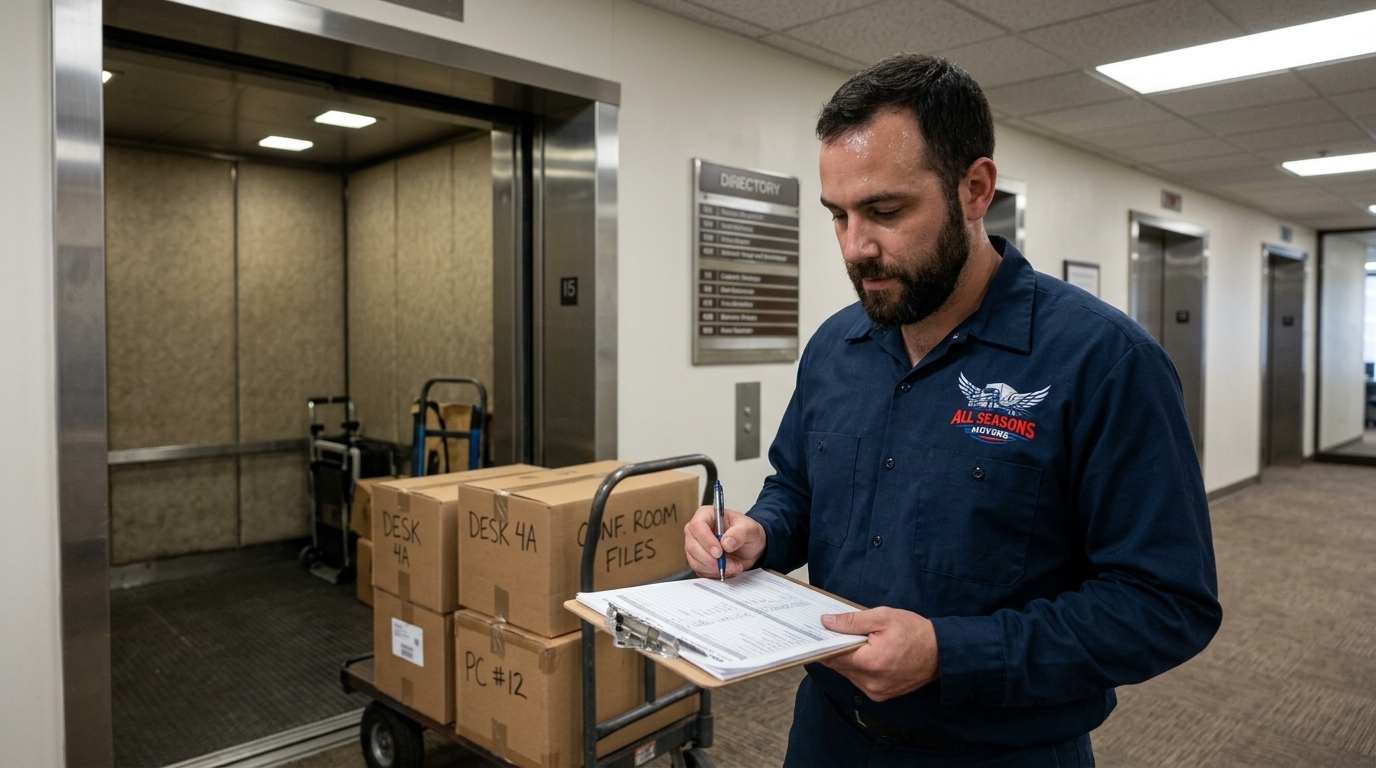
Notify vendors, clients, and utility providers of the address change. Start labeling furniture and files by department so nothing gets misplaced on move day.
1 to 2 weeks before
Confirm your moving date with your crew in writing. Back up all servers and disconnect nonessential equipment early.
Move week
Assign one internal point of contact to work directly with your moving team. This single decision prevents 90 percent of the confusion that happens on site.

What Actually Drives the Cost of a Commercial Move
Pricing questions come up constantly, and most articles dodge them with vague ranges. Here's what actually moves the number:
Square footage and volume. More desks and equipment means more time and more hands.
Building access. No freight elevator or no loading dock usually means a slower, pricier move.
Timing. Weekend and after hours moves often cost more but save you a full business day, which usually pays for itself.
Specialty items. Servers, safes, and heavy equipment require extra crew and equipment.
Distance. A move across the Loop is a different job than relocating from Chicago to a suburb like Naperville or Schaumburg.
Ask any mover for a written estimate that breaks these out. If they won't itemize it, that's a red flag worth noting before you sign anything.
Five Questions to Ask Before You Hire
Skip the sales pitch and ask these instead.
Have you handled a move our size before, and can you show it?
How do you protect servers, monitors, and IT infrastructure specifically?
Will the same crew that quotes the job be the crew that shows up?
What's your plan if the building requires a specific elevator reservation window?
Is the quoted price the final price, or are there conditions that could change it?
Any commercial movers Chicago companies can rely on long term should answer all five without hesitation.
The Downtime Killers Nobody Warns You About
A few things quietly wreck office moves that have nothing to do with the movers themselves.
Waiting until the last week to notify your internet provider about the new address.
Not measuring doorways and elevators before ordering new furniture.
Skipping a walkthrough of the new space before move day.
Assuming your old furniture will fit the new layout without checking dimensions first.
None of these are moving company problems. They're planning problems, and they're entirely avoidable with a week or two of foresight.
The Real Difference Between an Office Move and a Business Relocation
Moving desks is easy. Moving a business without customers noticing is the actual job. Crews that understand Chicago traffic patterns, building management rules, and how to sequence a move by department, not just by room, are the ones that protect your operations, not just your furniture.
If you're comparing office movers Chicago companies right now, the best move is talking through your specific building, timeline, and equipment needs before anything gets booked. You can get a free, no obligation quote in under a minute and have a real answer on cost and timing the same day.
Your business doesn't get a do over on a bad move week. Plan it right the first time, and Monday morning will feel like nothing happened at all.