













Chicago Moving Service Guide: How to Hire the Right Movers
Chicago Moving Service Guide: How to Hire the Right Movers Without the Stress
Booking a Chicago moving service sounds simple until you remember the city you live in. Narrow alleys, fourth floor walkups, lakefront high rises with strict elevator rules, and winter wind that makes every loading dock feel like a wind tunnel. The right team handles all of it before you ever notice. The wrong one turns moving day into a long, expensive lesson.
This guide shows you what to look for, what to ask, and how to avoid the surprises that catch most Chicago movers off guard. If you want a crew that already knows these streets, All Seasons Movers is built around exactly that local knowledge.

What a Chicago Moving Service Really Includes
Most people search for a mover expecting a truck and two strong helpers. A true full service team covers much more, and knowing the difference protects your budget.
1. Labor, Truck, and Protection
Expect trained movers, a properly sized truck, furniture pads, shrink wrap, and basic tools for disassembly. Ask whether these are included in the quoted rate or billed separately.
2. Packing and Unpacking
Packing is where time disappears. Professional packers finish in hours what takes most households several weekends, and they wrap fragile items the way insurance claims departments prefer.
3. Specialty Handling
Pianos, safes, treadmills, and oversized sectionals need specific equipment and experience. Mention them upfront so the crew arrives prepared, not surprised.
Chicago Challenges Most Guides Skip
Generic moving advice ignores the quirks that make a Chicago move different. Plan around these four and you will already be ahead of most customers.
1. Parking and Permits
Street parking in neighborhoods like Lincoln Park, Wicker Park, and the Loop is tight. A temporary no parking permit through the city can reserve curb space for the truck, but it needs advance notice. Ask your mover whether they help coordinate this.
2. Building Rules and Elevators
High rises often require a certificate of insurance, a reserved elevator window, and protected hallways. Miss one requirement and your move can be delayed or rescheduled. Send your mover the building rules early.
3. Stairs, Greystones, and Six Flats
Older Chicago buildings feature steep, narrow stairwells and tight turns. Furniture may need to be disassembled or lifted a different way. A crew with real experience here saves time and protects your walls.
4. Weather That Changes Everything
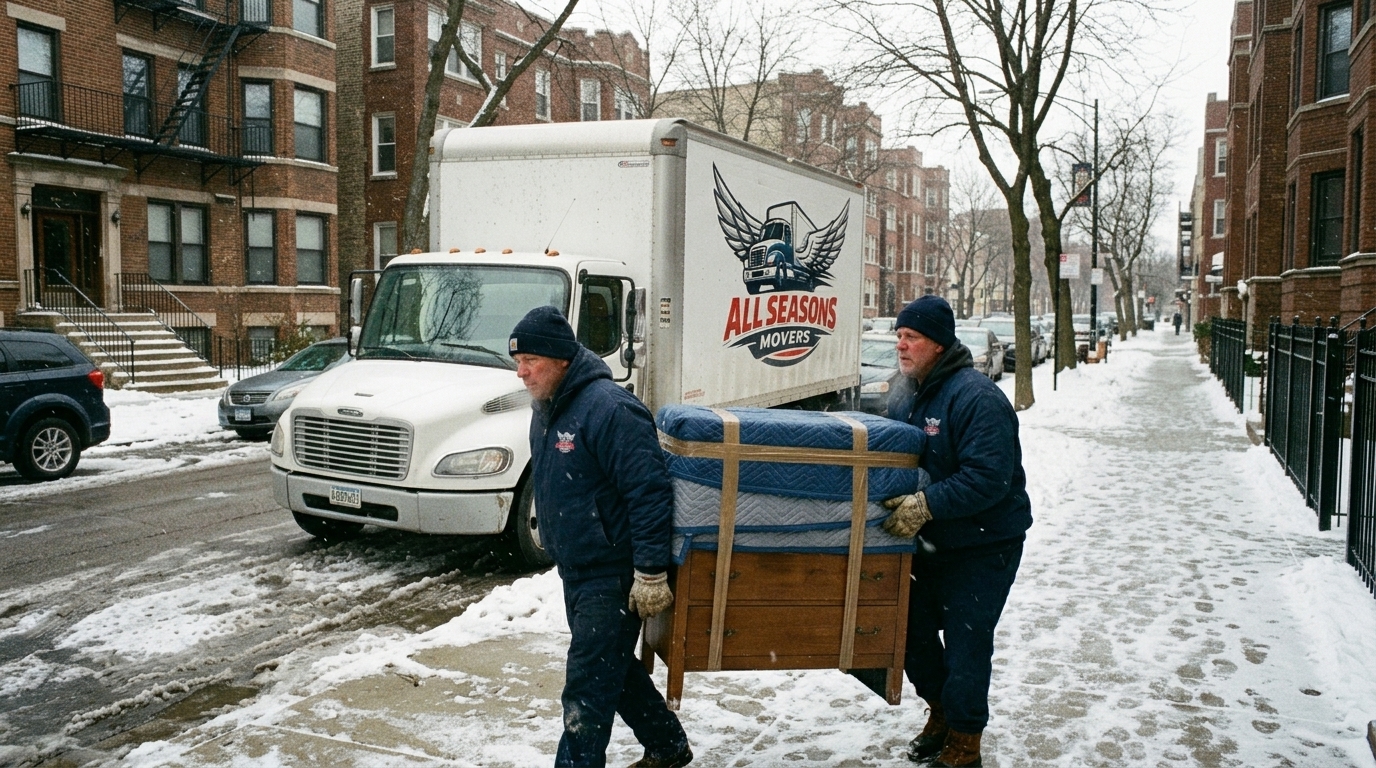
Snow, ice, and summer storms can slow loading and raise safety risks. Flexible scheduling and proper floor protection matter more here than almost anywhere else. Always ask how your mover handles weather delays.
How Chicago Moving Service Pricing Works
Most local moves are billed hourly, based on crew size and truck. Long distance moves are usually priced by weight or a flat estimate. Neither number tells the whole story until you understand what sits behind it.
What Moves Your Quote Up or Down
Four factors drive most estimates: the number of movers, the distance between the truck and your door, the amount of stairs, and any packing materials used. Moving on a weekday, mid month, or outside peak summer often costs less. Weekends at the end of the month fill first and cost the most.
Red Flags in a Low Quote
A suspiciously cheap price often hides trouble. Watch for quotes given without a walkthrough or video survey, requests for large cash deposits, unmarked trucks, and vague terms like "additional fees may apply." Each one signals a company that may raise the price once your belongings are on the truck.
Six Questions to Ask Before You Book
A confident, reputable company welcomes tough questions. Use this list on every call.
Are you licensed with the Illinois Commerce Commission, and can I see your license number?
Is your estimate binding, or can the final cost change?
What liability coverage is included, and what does it actually cover?
Are your movers employees or temporary day laborers?
How do you handle parking, elevators, and building requirements?
What is your policy if something is damaged?
Pay attention to how quickly and clearly they answer. Hesitation on simple questions usually predicts trouble on moving day.

Your Moving Timeline for a Smooth Day
Four Weeks Out
Collect two or three quotes, confirm building rules, and book your date. Good Chicago crews fill quickly, especially from May through September.
Two Weeks Out
Start decluttering and packing rooms you rarely use. Donate what you will not need. Fewer items means fewer billable hours.
Moving Day
Keep valuables, medications, and important documents with you. Label boxes by room, walk the crew through the space, and keep pathways clear. Stay reachable so the team can ask quick questions.
Why Local Experience Makes the Difference
Anyone can rent a truck. What you are really paying for is judgment: knowing which route avoids a construction jam, how to protect a hardwood floor in January, and when to call the building manager before a problem grows. That judgment comes only from years of working these exact streets.
A reliable Chicago moving service also treats your belongings like its own. Careful wrapping, clear communication, and honest pricing are not extras. They are the standard you should expect from the first phone call to the last box.
Ready to Move With Confidence?
Choosing the right mover is the single biggest decision you will make in the entire moving process. Do your research, ask direct questions, compare written estimates, and plan around the realities of Chicago buildings, weather, and parking. Preparation turns a stressful day into a manageable one.
When you are ready for a team that understands every challenge in this guide, request your quote today and tell us about your move. Share your date, your building details, and anything unusual you are bringing along. A clear plan, an honest price, and a careful crew are waiting on the other end. Your next move can be the easiest one you have ever had, and it starts with one conversation.