













Chicago IL Moving Companies: How to Choose One You Can Trust
Chicago IL Moving Companies: How to Pick One You Can Trust Before the Truck Arrives
Searching for Chicago IL moving companies usually turns up the same thing: endless lists of names with five star ratings and very little explanation. Nobody tells you what actually separates a smooth move from a miserable one. This guide does. Whether you are heading to a Lincoln Park brick walkup or a Loop high rise, here is how to judge a mover before you hand over a deposit.
Why Moving in Chicago Is Its Own Challenge
Chicago moves fail for local reasons. Narrow alleys, tight parking on busy streets, three flight walkups, freight elevators that must be booked days ahead, and winter weather that can turn a loading dock into an ice rink. A mover who does not ask about these details is guessing, and guessing costs you money on moving day.

The 6 Point Vetting Checklist
Before you compare prices, run every company through these checks.
1. Licensing and Insurance
Illinois household goods movers should be licensed through the Illinois Commerce Commission, and you can ask for proof. Ask what coverage comes standard and what extra protection is available for fragile or high value items.
2. A Real Estimate, Not a Phone Guess
Reliable companies ask for your inventory, floor numbers, and access details. Request a written estimate that states whether it is binding, non binding, or hourly, so you know exactly how the final bill is calculated.
3. Deposit Habits
Be cautious with any company demanding a large payment upfront. A small booking deposit is normal. Cash only requests and pressure to pay before a written agreement are warning signs.
4. Reviews That Mention Details
Skip the vague praise. Look for reviews that describe stairs, tight elevators, damaged items handled fairly, and crews arriving on time. Specifics show a company that treats real homes carefully.
5. Crew and Equipment
Ask whether the movers are employees or day labor, and whether trucks carry blankets, dollies, and floor protection. Trained, uniformed crews handle a tight stairwell very differently than strangers hired that morning.
6. Parking and Building Plans
Your mover should talk through truck placement, curb space, and building move in rules. Many Chicago buildings require certificates of insurance and reserved elevator times, and a prepared company will help you handle both.

Pricing Surprises Chicago Movers Rarely Explain
Price shopping alone causes most regrets. Two quotes can look identical while hiding very different fees. Compare these line items side by side:
Stair and long carry fees: charged when the truck cannot park near your door.
Travel time: some companies bill the drive between locations, others do not.
Packing materials: boxes, tape, and wrap often appear as separate charges.
Heavy item surcharges: pianos, safes, and oversized furniture usually cost extra.
Ask each company to confirm in writing which of these apply to your move. A clear answer now prevents an argument at your front door later.
Timing Your Move Around the Chicago Calendar
Demand spikes at the end of the month, on weekends, and through summer, when leases turn over and families relocate before the school year. Winter moves can cost less and calendars open up, but you will need a crew that plans for snow, ice, and shorter daylight.
A smart booking window is four to six weeks ahead for peak season and two to three weeks ahead for quieter months. Last minute moves are possible, but your choices shrink fast.
Questions to Ask on Every Call
Keep this short script beside you while you collect quotes. How will you handle my building's elevator or stairs? Who handles damage claims, and how fast? Will the same crew stay with my move all day? Do you offer packing and unpacking? Companies with confident, specific answers usually deliver confident, specific service.
Local Crews Versus Faceless Brokers
Some listings online are brokers who sell your job to whoever bids lowest. You never meet the crew until moving day, and nobody feels accountable. A company with its own trucks, its own trained movers, and a local office keeps responsibility in one place.
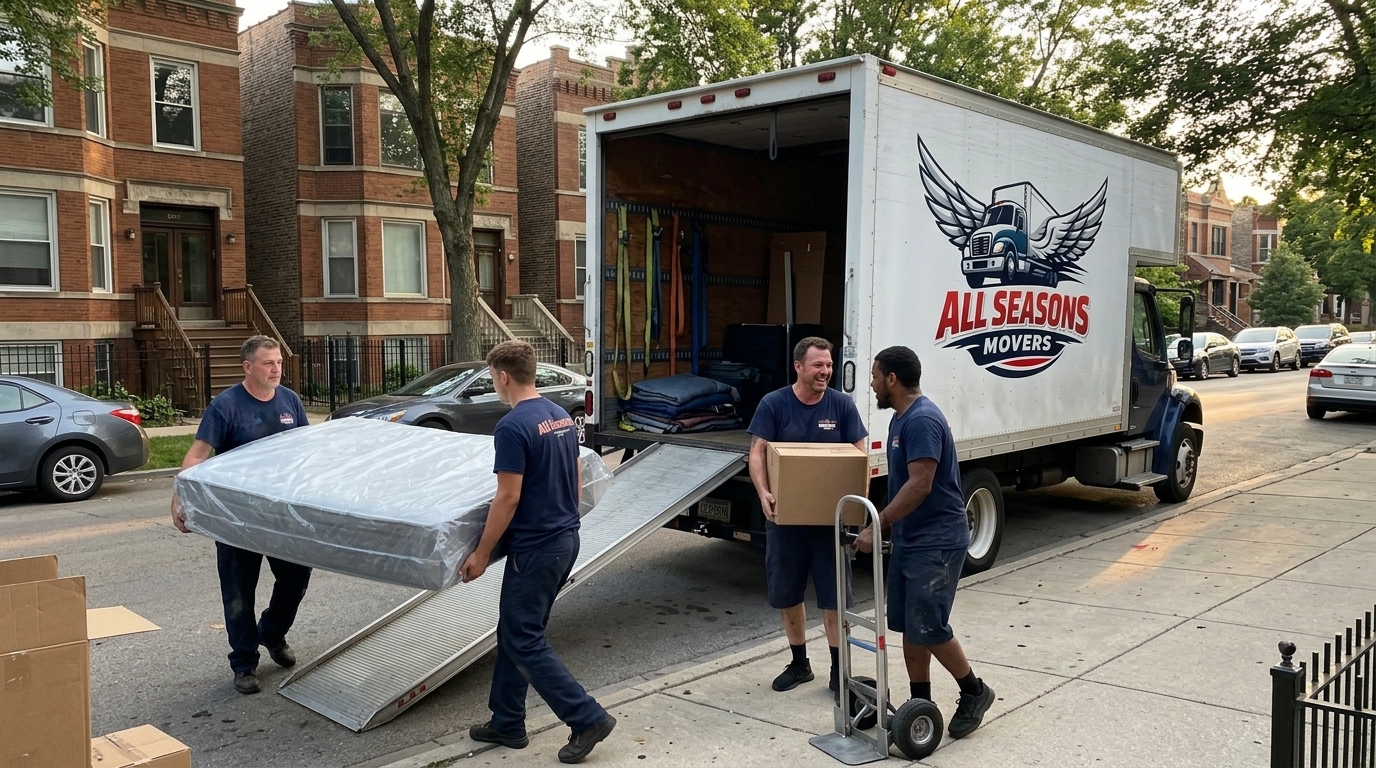
That is the model All Seasons Movers is built around. Our uniformed crews handle residential moves, apartment moves, and office relocations across Chicago and the surrounding suburbs, with clear communication from the first call to the final box.
Prepare Your Home to Save Time and Money
Even the best crew works faster when you prepare. Try this simple plan:
1. Two Weeks Out
Declutter, donate, and confirm elevator reservations or curb space with your building or the city. Label every room on a floor plan so movers can place furniture correctly.
2. One Week Out
Pack nonessentials, photograph valuable items, and set aside documents, medications, and chargers in a bag you carry yourself. Disassemble what you can.
3. Moving Day
Clear walkways, keep pets secure, and walk the home with the crew lead before loading begins. A five minute conversation prevents most misunderstandings.
Red Flags That Should End the Call
Walk away if a company gives a price without asking any questions, refuses to put terms in writing, shows up in unmarked vehicles, or has no clear business address. Reputable movers welcome scrutiny because they have nothing to hide. If a quote sounds too good to be true, it usually leaves out the fees listed earlier.
Ready to Book With Confidence?
Choosing among Chicago IL moving companies does not need to feel like a gamble. Verify the license, demand a written estimate, ask about stairs and parking, and compare the fine print rather than just the bottom line. Do that, and you will find the crew that treats your belongings like their own.
If you want a team that explains every step and shows up ready for Chicago's stairs, alleys, and weather, request your personalized quote with All Seasons Movers today. Tell us about your building, your date, and your budget, and we will build a plan that holds up on moving day. Your move deserves that.