













Chicago Apartment Move In Rules: COIs and Elevator Booking
Chicago Apartment Move In Rules: COIs, Elevator Reservations and Building Access
You booked the truck, packed the boxes and got the keys. Then the building manager asks for a certificate of insurance and your elevator time slot, and suddenly moving day feels like it hangs on paperwork. It does, and that is good news, because paperwork is the easiest part of a move to fix early. Here is exactly what Chicago buildings tend to ask for, in the order you will need it.
Why Chicago Buildings Ask Before Your Movers Ever Arrive
A building is shared space. One careless move can scratch an elevator cab, crack a lobby floor or block a loading dock that many other residents rely on. So management sets rules before anyone carries a single box. The two requests you will hear most are a certificate of insurance and a booked elevator window. Most high rise guidance, including this HireAHelper guide to planning around the elevator, says buildings commonly want both.
What a COI Actually Is (And What It Is Not)
A certificate of insurance, or COI, is a short summary issued by your mover's insurance broker. It proves the company carries coverage. The coverage itself lives in the underlying policies, and the certificate is only the proof, as RentalRealEstate explains in its breakdown of what buildings want from movers. Think of it as a boarding pass, not the flight.
That distinction matters. A COI does not promise your belongings are protected, and it is not a substitute for asking your mover what they cover. It simply tells the building the crew is insured to work on the property.
The Four Papers Some Buildings Request
Requirements differ by building, but Born to Move notes that management companies may require general liability, umbrella liability, workers' compensation and auto insurance certificates. Always ask your property manager for the exact wording, because the building controls it.
Your Timeline: Who Does What and When
Paperwork delays are the number one way a perfectly planned move stalls at the curb. Work backward from move day using this simple order.
Ask the building first. Call management and request the written move rules, including COI wording, elevator hours and deposit details.
Send those rules to your mover. Your mover's broker needs the exact certificate holder wording. Zumper suggests requesting the COI 7 to 10 days before your move so management can review it.
Reserve the elevator. Book it as soon as your date is firm. Popular dates fill quickly, and a missed slot may not be rebookable the same day.
Confirm approval in writing. Do not assume the certificate was accepted. Ask management to confirm approval, and save the email.
Reconfirm the week before. Check the elevator slot, loading dock window and any truck size limits with your building contact, a checklist Olympia Moving also recommends.
Elevator Reservations, Move Windows and Loading Docks
Many buildings give you a fixed block of time. Short windows change your whole plan, so pack early, label by room and stage heavy items near the door so the crew can work steadily from the first minute. New City Movers notes that many downtown buildings require elevator reservations, a designated loading dock or specific moving hours.

Loading Dock and Truck Access
Ask where the truck can park, whether there is a height or size limit and whether the dock is shared with deliveries. A dock that is already full can leave a crew circling the block while your elevator window ticks away.
Fuel and Freight: Why Chicago Move Days Feel Tighter in 2026
Logistics around the city are not quiet this year. Chicago area diesel reached a record $6.30 a gallon on May 15, according to GasBuddy figures reported by the Chicago Sun Times, and C.H. Robinson's November freight update says 2026 is on pace for the highest average annual diesel price in history. For you, that means trucks are expensive to run and idle, so a tight window with no wasted time helps everyone. Early COI paperwork keeps your crew productive instead of waiting at the curb.
The Angle Most Guides Skip: Move Out Rules Matter Too
Most articles focus on the building you are entering. But your old building likely has its own checklist, and it may want its own COI and elevator slot. Moving between two buildings can mean two sets of paperwork, two approvals and two reservations. Do not assume one certificate covers both, since wording can differ. Start both conversations on the same day.
Common Mistakes That Cancel Elevator Time
Sending a certificate with incomplete holder wording.
Booking movers before reading the building rules.
Skipping the written approval.
Forgetting parking and dock permissions.
A Simple Move Day Checklist for Building Access
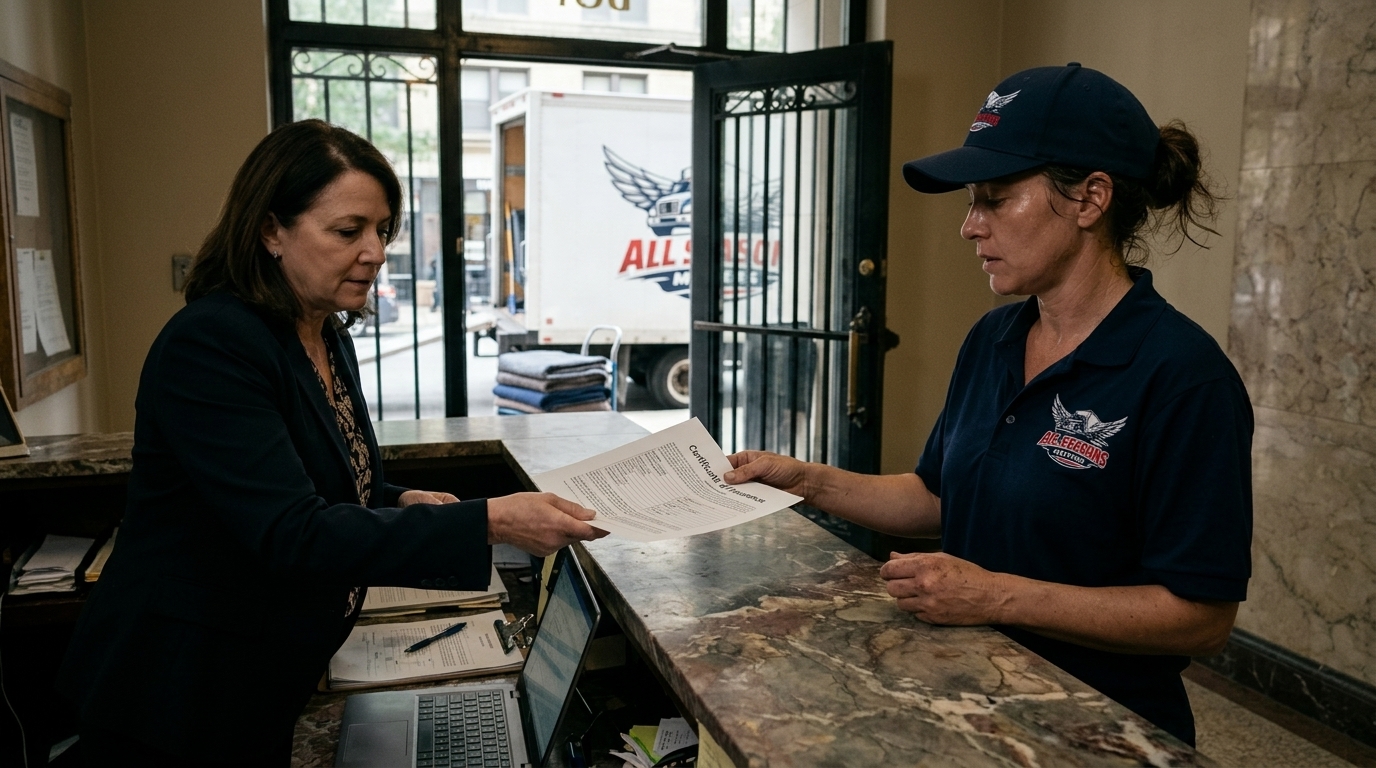
On the morning of your move, keep a folder, printed or on your phone, with four items: the building's move rules, your approved COI confirmation, the elevator reservation and your building contact's phone number. Greet the doorman or manager, show the paperwork and walk the route with your crew lead. A two minute walkthrough prevents arguments later.
Choosing Movers Who Already Speak Building
Ask any mover three questions before you book. Can you provide a COI with our building's wording? Have you worked with freight elevators and loading docks? Who communicates with management? Clear answers up front save you real stress. If you want a team that plans around building rules, start at the All Seasons Movers website or read about apartment movers in Chicago.

Quick Answers Before You Call Management
Do I always need a COI? Not always. It depends on the building, so ask management in writing. How early should I request it? A good rule is 7 to 10 days. Does a COI protect my furniture? Not exactly. It shows the mover carries insurance, not that your items are covered.
Ready to Plan Your Move?
Call All Seasons Movers at (872) 465 8685 or visit local movers Chicago to plan a move that clears building rules on the first try.