



































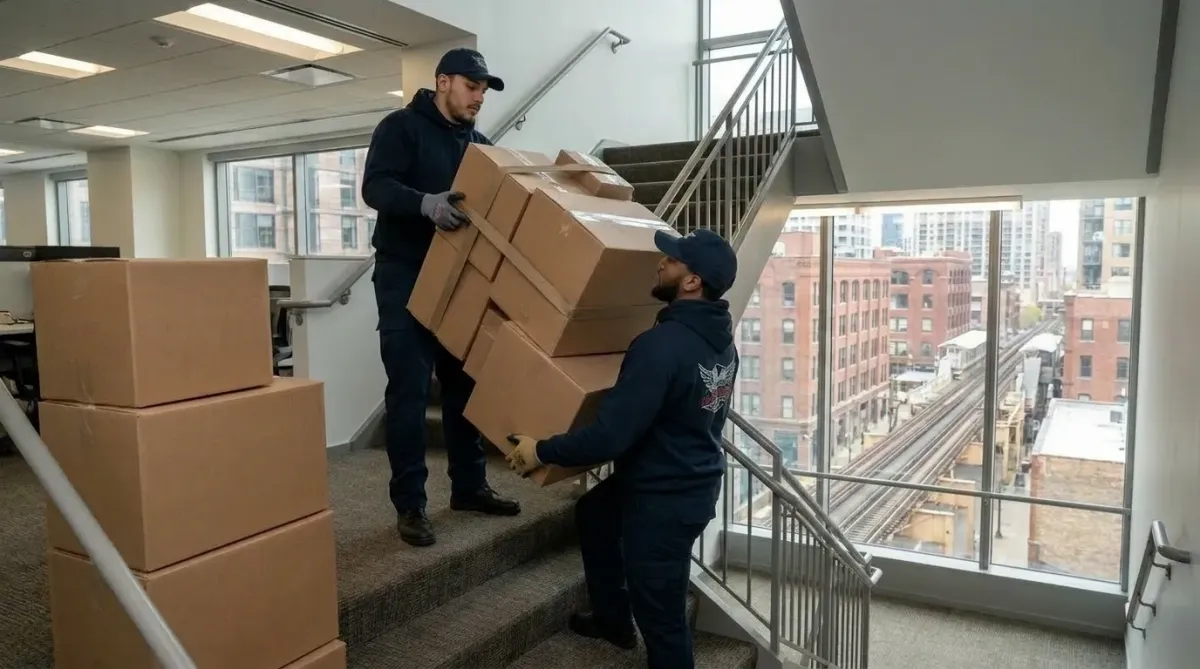
Commercial Office Moving: The Downtime Cost Nobody Calculates (Until It's Too Late)
The Hidden Clock: What Every Hour of Commercial Office Moving Downtime Is Quietly Costing Your Business
Most businesses plan the move.
They book the date, hire a crew, arrange the trucks, and build a timeline. They feel organized. Prepared. Like they've covered the bases.
What almost nobody does — until they're standing in an empty office on day two of an unexpected IT outage — is calculate what commercial office moving downtime actually costs.
Not the mover's invoice. The real cost. The one that doesn't show up until after moving day, in the form of missed billable hours, delayed client deliverables, a team that couldn't work for two days, and a system restore that nobody anticipated budgeting for.
Here's the math that changes how you think about your next office relocation.
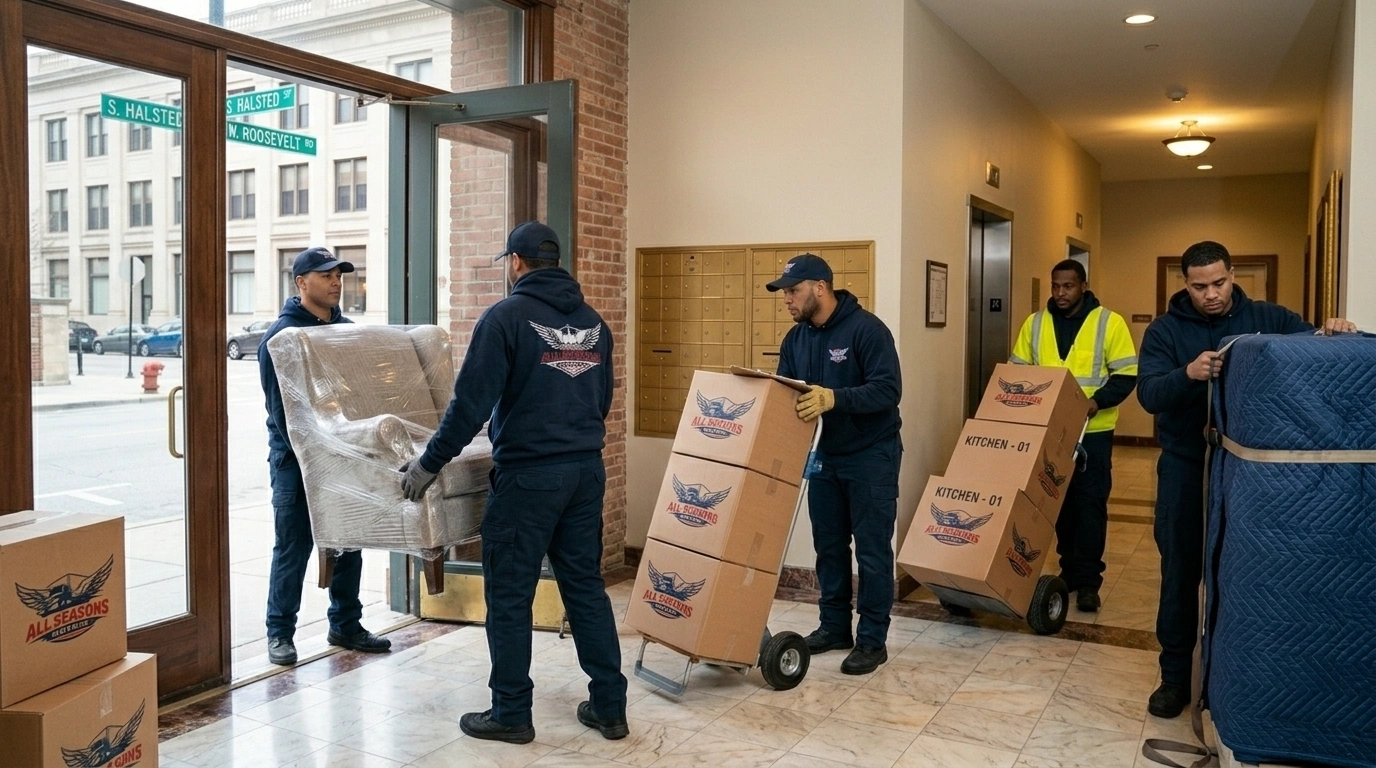
The Downtime Equation Most Business Owners Skip
Let's run through a scenario that plays out more often than the moving industry would like to admit.
A 40-person company relocates their Chicago office. The move takes one full business day. IT goes down at end of day Friday and isn't fully restored until Wednesday morning — a four-day gap that nobody planned for because "the movers said they'd handle it."
Now do the math:
40 employees × $35 average hourly rate × 8 hours × 2 working days of significant impairment = $22,400 in labor cost for work that didn't get done
Client deliverables delayed by 2 business days — with a client on a retainer that has SLA provisions
One new client proposal that couldn't be sent because the proposal files were on the server that was offline
The mover's invoice? $4,800.
The actual cost of the move? Multiples of that — in ways that never appear on anyone's post-move accounting review because they get attributed to "a slow week" rather than to the relocation that caused them.
This is the hidden clock that runs during every commercial office moving project. The best [chicago commercial movers] (internal link: chicago commercial movers) build their entire process around stopping that clock from running — or at least minimizing how long it ticks.
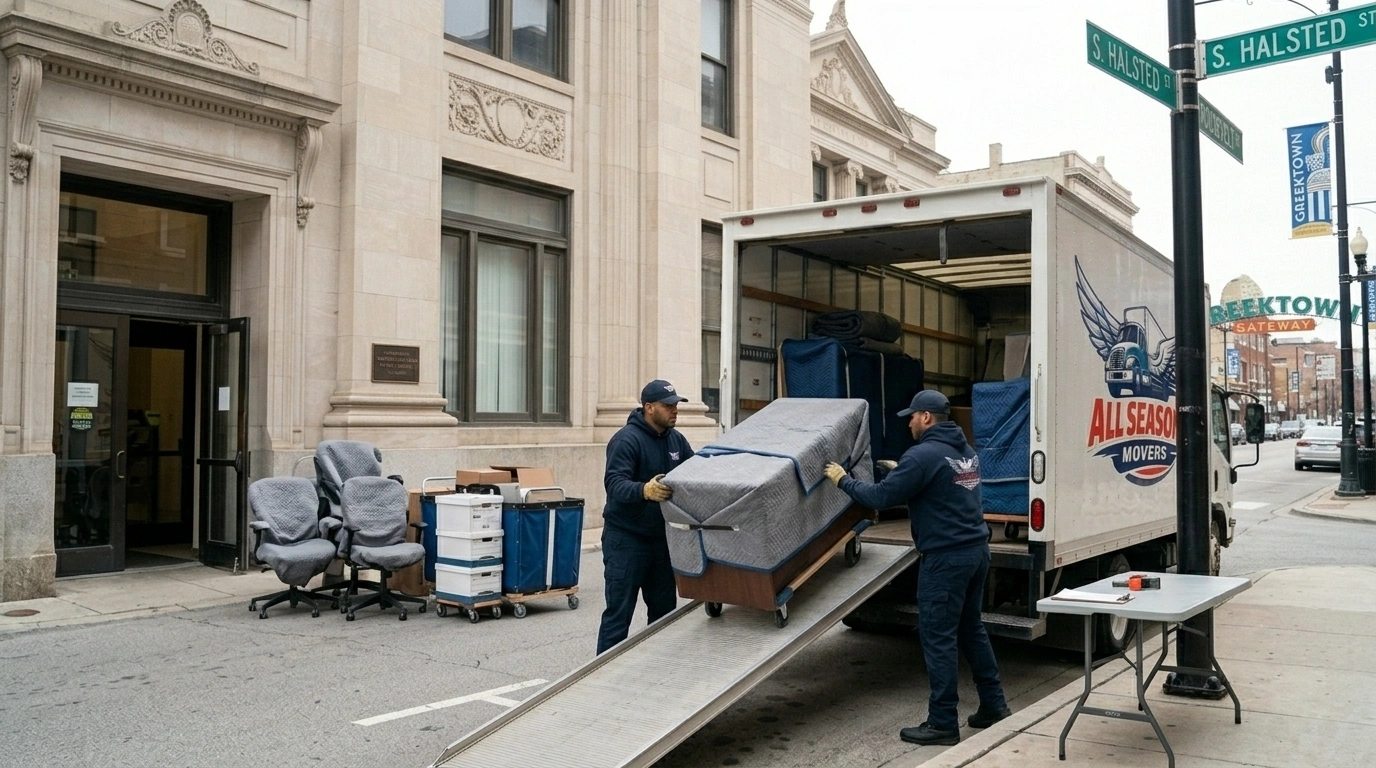
Why Commercial Office Moving Is a Business Continuity Problem, Not Just a Logistics One
This reframe matters, because it changes what you look for in a mover.
If commercial office moving is a logistics problem, you're optimizing for price and truck availability. If it's a business continuity problem — which it actually is — you're optimizing for speed of recovery, IT handling expertise, phased execution capability, and post-move operational readiness.
Those are completely different decision criteria. And most businesses only figure that out on moving day, when it's too late to change anything.
A professional [office moving] (internal link: office moving) operation approaches your relocation the way a surgeon approaches a procedure: with a pre-op plan, a clear sequence, contingency protocols for the moments things don't go exactly right, and a defined recovery timeline.
Here's what that looks like in practice.
The Five Stages of Commercial Office Moving Done Without Downtime
Stage 1: The Business Impact Assessment (3–4 Weeks Before)
Before any boxes get labeled, a professional commercial office moving team needs to understand your operational dependencies. Which systems absolutely cannot go down? Which departments are client-facing on a daily basis? Are there regulatory or compliance requirements around data handling during transit?
This assessment shapes everything that comes after — sequence, timeline, IT vendor coordination, and phased move structure.
Stage 2: Phased Move Architecture (2–3 Weeks Before)
Not every business can go dark for a full moving day. The best [office movers Chicago] (internal link: office movers chicago) design phased relocations that keep critical functions operational while the move happens around them.
This might look like moving administrative departments on Day 1, client-service teams on Day 2, and IT infrastructure last — with a dedicated reconnection window that's been scheduled with your IT vendor in advance, not figured out on the morning of.
Stage 3: IT Disconnect and Documentation Protocol (1 Week Before)
This is where more commercial office moving projects go sideways than anywhere else. Equipment gets disconnected without documentation. Cables get bundled incorrectly. Server configurations that took months to tune get reset because the reconnection team didn't have the original specs.
A professional operation documents everything before it moves: labeled cables, photographed rack configurations, inventoried peripherals. The goal is that reconnection looks exactly like disconnection — in reverse, with no guesswork.
Stage 4: Moving Day Execution With a Live Coordinator
On moving day, every professional commercial office moving operation should have a dedicated on-site coordinator — not a dispatcher watching from a call center. Someone who can make real-time decisions when the freight elevator booking runs 45 minutes late, when a workstation gets flagged for damage before it's loaded, when a department lead calls with a last-minute priority change.
The [chicago commercial movers] (internal link: chicago commercial movers) who handle this best train their coordinators specifically for business relocation — because the decisions they make in real time directly affect how quickly your team is operational in the new space.
Stage 5: Post-Move Operational Verification
The move isn't done when the last box comes off the truck. It's done when your team is sitting at their desks, systems are live, phones are forwarding correctly, and every department has confirmed operational readiness.
A professional commercial office moving company builds this verification step into the project — a structured walkthrough with your internal point of contact before the crew leaves the building. Anything that's wrong gets flagged and corrected on the spot, not discovered by an employee at 8 AM the next morning.

What All Seasons Movers Does Differently for Chicago Office Relocations
All Seasons Movers has been handling commercial office moving across Chicago — from the Loop to River North, from the West Loop to the Near North Side — with a single guiding principle: your business doesn't stop, your move happens around it.
As Chicago's trusted same-day and 24-hour movers, All Seasons Movers brings that same urgency and responsiveness to every commercial relocation. That means:
Flexible scheduling — nights, weekends, phased moves — built around your business calendar, not ours.
Dedicated move coordinators assigned to every commercial job, on-site from first truck to final walkthrough.
IT-aware crews trained to handle workstations, monitors, network equipment, and server infrastructure with the care that commercial-grade equipment demands.
Full Chicago knowledge — building COI requirements, freight elevator protocols, loading dock logistics across every major office corridor in the city.
Transparent, itemized pricing with no surprise charges on invoice day.
Whether you're relocating a 10-person startup or a 200-person operation across multiple floors, All Seasons Movers treats your office moving project as the business-critical event it actually is.
The Questions That Protect You Before You Sign Anything
Before you commit to any commercial office moving company, run through this filter:
"What's your plan for keeping us operational during the move?" Any company worth hiring has a real answer — not a vague reassurance.
"Who specifically will be on-site as our coordinator on moving day?" Get a name. Confirm their commercial experience.
"How do you handle IT disconnect and reconnect documentation?" Listen for a specific protocol, not a general statement about being careful.
"What's your experience with our building specifically?" For Chicago high-rises and multi-tenant office buildings, prior building experience is a meaningful advantage.
"What does your post-move verification process look like?" If they don't have one, that's your answer.
The right commercial office moving company doesn't struggle with these questions. They've answered them a hundred times — because they've planned for them a hundred times.
The Bottom Line: Stop the Hidden Clock Before It Starts
Commercial office moving done right doesn't just get your furniture from Point A to Point B. It protects the revenue, the team productivity, and the client relationships that your business runs on.
Every hour of unnecessary downtime has a dollar value. The right mover's job is to make sure as few of those hours as possible are on your tab.
All Seasons Movers knows Chicago. They know commercial relocation. And they know what it takes to get your business operational — fast, clean, and without the surprises that blow up post-move weeks.